Snap-In Dentures / All-on-4
Snap-in dentures and All-on-4 are implant-supported full-arch options designed to feel more stable than traditional dentures. They use dental implants to help reduce slipping and movement—especially on the lower arch—so eating and speaking can feel more secure.
Snap-in dentures • Full-arch implant options • Stability upgrades • Replacements • Adjustments
What Are Snap-In Dentures?
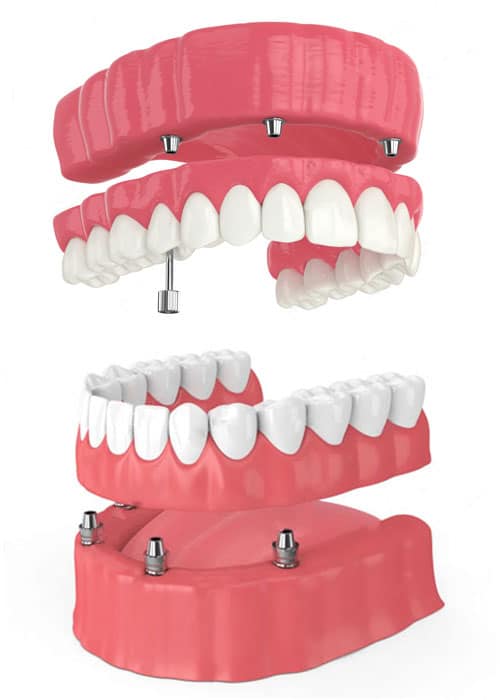
Snap-in dentures (often called implant-retained dentures) are removable dentures that “click” or attach onto dental implants using an attachment system. You can take them out for cleaning, but when they’re in place, they typically feel more secure than a conventional denture.
Snap-in dentures may be recommended when:
- Your denture feels loose or shifts during meals or conversation
- You want better retention without committing to a fixed full-arch design
- You want a removable option for easier cleaning at home
- Lower denture movement has been a major frustration
- You’re a suitable candidate for implants based on health and bone support
Related pages: Complete Dentures • Partial Dentures • Implant-Supported Dentures
What Does “All-on-4” Mean?
All-on-4 is a term commonly used to describe a full-arch implant solution supported by four implants (though the number can vary depending on the plan). The goal is to support a full set of upper or lower teeth with an implant-based design.
Depending on your case and the design chosen, All-on-4-style treatment may be planned as:
- Fixed (not removable by the patient) or
- Removable (removed for cleaning)
Because the term is used differently online, the most helpful approach is to focus on what you actually want (more stability, easier eating, a fixed vs. removable feel) and then match you with a design that fits your anatomy, health history, and goals.
Snap-In vs All-on-4: What’s the Difference?
People often lump these together because both use implants—but they’re not the same thing.
Snap-in dentures (removable)
- Typically removable for cleaning
- Attach to implants using a connector system
- Often chosen for a balance of stability + easier maintenance
- Great option for patients who want more security than a traditional denture
All-on-4-style full arch (fixed or removable, case-dependent)
- A broader category of full-arch implant treatment
- May be designed to feel more like fixed teeth
- Usually involves more detailed planning and components
- The final feel depends on the design, implant placement, and your bite
Snap-in is usually a type of removable implant-retained denture, while All-on-4 typically refers to a full-arch implant approach. A consult helps clarify which option matches what you’re looking for.
How These Dentures Stay in Place
Snap-in and All-on-4-style dentures rely on three main things working together:
- Dental implants (anchors)
Implants provide stable anchor points in the jaw to reduce denture movement. - Attachment or support system
Snap-in dentures use specific connectors that provide retention. Fixed-style designs rely on a different support approach, often involving components designed for long-term stability. - Fit and bite balance
Even with implants, comfort still depends on a well-fitting prosthetic and a balanced bite. Bite balance helps prevent pressure points and improves day-to-day wearability.
A well-designed implant-based denture should feel secure and predictable without creating unnecessary stress on the implants or surrounding tissues.
Who Is a Good Candidate?
Snap-in and All-on-4-style options can be a great fit for many patients, but candidacy depends on several factors, including:
- Oral health (gum health, infection risk, existing conditions)
- Bone support (how much bone is available for implant placement)
- Medical history (some conditions/medications can affect healing)
- Smoking and lifestyle factors (may affect outcomes)
- Your goals and expectations (removable vs fixed feel, stability, timeline, budget)
If you’ve been told you don’t have enough bone in the past, it’s still worth an assessment—options can vary depending on the situation and the type of design being considered.
What the Process Typically Looks Like
Even though every case is different, implant-based full-arch treatment usually follows a similar flow. The main goal is to plan implants safely, design a prosthetic that feels stable and natural, and then fine-tune comfort with follow-ups.
- Consultation and exam
We discuss your goals (stability, comfort, preference for fixed vs. removable), examine your gums and bite, and review your medical history. Imaging is typically needed for planning, and we’ll also talk through any factors that could affect healing or the timeline. - Treatment planning
We outline the implant approach (how many implants and where they’d go), the prosthetic design, and what the appointment sequence generally looks like. You’ll get a realistic timeline, plus a clear breakdown of what’s essential vs optional, so you can make an informed choice. - Implant placement + healing (case-dependent)
Implants are placed, then they need time to integrate with the bone. Healing time varies by plan and individual. In some cases, there may be a temporary phase while everything heals and settles. - Prosthetic design and fitting
A denture or full-arch prosthetic is made (or adapted) to connect to the implants and function with your bite. Try-in steps may be used to confirm fit, appearance, and bite balance before finalizing. - Delivery + follow-ups
Once the prosthetic is delivered, follow-ups help refine comfort, check function, and keep everything stable over time. We’ll also review home care and what maintenance to expect for the attachment components.
Getting Used to Snap-In / All-on-4 Dentures
Even with added stability, there’s still an adjustment period. Your mouth and muscles need a bit of time to adapt to how the new teeth sit, how your bite feels, and how chewing forces are distributed. Most patients find things improve steadily with a little practice and a few follow-up refinements.
Many patients notice:
- A different feel when biting and chewing at first
Because the prosthetic is more anchored, chewing can feel more controlled and direct. Some people notice they don’t have to “think” as much about keeping their denture in place, but it can still take time to get used to the new bite and the way food breaks down. - Improved confidence over time
Many patients feel more comfortable eating and speaking once they realize the denture is less likely to shift, lift, or slide. That confidence tends to build as you try more foods and get used to the feel in everyday situations. - Minor pressure points
Small sore spots can still happen, especially early on. Even with implants, the prosthetic still contacts gums and soft tissues in certain areas, and tiny pressure points can show up as your mouth adapts. These are usually improved with targeted adjustments. - Maintenance needs
Attachment components can wear over time and may need replacement to keep the prosthetic feeling secure. This is normal maintenance—similar to how other dental appliances can need periodic upkeep to stay working at their best.
Follow-up visits matter because small refinements can significantly improve comfort and function. Keeping components in good shape also helps stability stay consistent long-term and helps the prosthetic keep feeling “tight” and predictable.
Snap-In / All-on-4 Cost (What Affects Pricing)
Fees can vary widely because implant-based full-arch options involve more steps and components than traditional dentures. Final cost depends on implant count, complexity, attachment/prosthetic design, and whether other treatment is needed first.
Common cost factors include:
- Number of implants and placement complexity
- Type of prosthetic design (removable snap-in vs fixed-style)
- Materials and components used
- New prosthetic vs converting an existing denture (case-dependent)
- Whether extractions, infection control, or other dental work is needed first
- Appointments and timeline (planning, surgery, healing, final fitting)
If you want a clear estimate, the most accurate quote comes after an exam and imaging. We’ll outline realistic options based on your goals and budget.
Not Sure Which Implant-Based Option Fits You Best?
If you’re deciding between snap-in dentures and an All-on-4-style plan, a consultation can confirm your candidacy and outline realistic options—based on your mouth, goals, and budget.