Partial Dentures
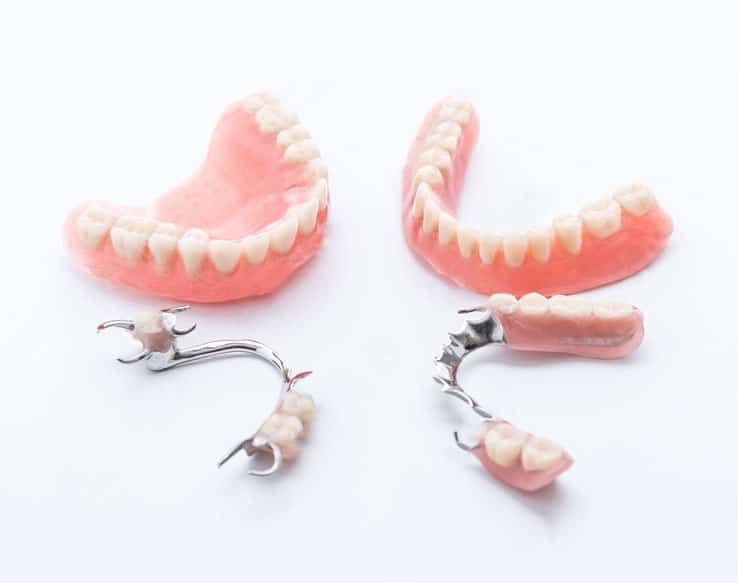
Partial dentures replace one or more missing teeth while keeping your remaining natural teeth. They’re custom-made to fit around your teeth and gums, helping restore your smile and improve everyday function like eating and speaking.
New partials • Replacements • Relines • Adjustments
What Are Partial Dentures?
Partial dentures are removable prosthetic teeth designed to fill the gaps where teeth are missing. They’re made to sit comfortably against the gums and anchor around existing teeth so the partial feels stable and works with your bite.
Partial dentures may be recommended when:
- You’re missing several teeth, but still have healthy teeth remaining
- You want a removable option to restore function and appearance
- You want to help prevent neighbouring teeth from shifting into open spaces
- You have an older partial that no longer fits well or feels secure
Related pages: Complete Dentures • Implant-Supported Dentures • Snap-In Dentures
Types of Partial Dentures
Partial dentures can be designed in several ways. The “best” option depends on how many teeth are missing, where they’re missing, how your bite works, and what you want for comfort and appearance.
Acrylic partial dentures
Often used as a practical, budget-friendly option and sometimes as a transitional solution when other treatment steps may still be planned. They can be easier to adjust, but may feel bulkier for some patients.
Cast metal partial dentures
Designed with a thin, rigid metal framework. In many cases, these can feel more secure and less bulky than acrylic options. The design details matter a lot—especially how it’s supported and how the clasps are planned.
Flexible partial dentures (case-dependent)
Some patients ask about flexible materials for comfort or aesthetics. These can be suitable in select situations, but they aren’t ideal for everyone. A consultation helps confirm whether it’s a good match for your mouth and bite.
How Partial Dentures Stay in Place
Partial dentures are designed to feel secure by using a few things working together—not just “tightness.” Stability comes from how the partial fits against your gums, how it’s supported by your remaining teeth, and how the design distributes chewing forces so it doesn’t rock or shift.
Partial dentures typically rely on a combination of:
- Fit against the gums
The base of the partial sits against the gum tissue in the areas where teeth are missing. A close, accurate fit helps reduce movement and keeps the partial feeling more comfortable day to day. - Support from remaining teeth
Your natural teeth help guide and support the partial so it seats in the right position. This support is important for stability when you chew, and it helps prevent the partial from sinking into the gums. - Design features (depending on the style)
Many partials use specific components to improve retention and stability, such as:
- Fit against the gums
- Clasps (to help the partial hold onto certain teeth)
- Rests (small supports that help keep pressure off the gums and improve bite stability)
- Framework design (how the partial is built to resist rocking and distribute forces evenly)
A well-designed partial should feel stable and predictable—without putting unnecessary stress on the supporting teeth. That’s why the planning stage matters: good design is what makes a partial feel like it “belongs” in your mouth rather than something you’re constantly aware of.
What the Process Typically Looks Like
Even though every case is a bit different, partial dentures usually follow a similar step-by-step flow. The goal is to make sure your partial doesn’t just look good—it also fits comfortably, functions well, and feels balanced when you bite and chew.
- Consultation and exam
We discuss your goals (comfort, chewing, appearance), assess your remaining teeth and gums, and look at your bite. If needed, we may recommend imaging (like X-rays) to plan safely and accurately. - Records and impressions
Next we take measurements and impressions/records of your mouth. This guides the fit and design so the partial is built for your anatomy—not a generic shape. - Design planning (function + aesthetics)
This is where stability and comfort are built in. We plan how the partial will sit, how it will anchor, and how it will work with your bite—so it feels balanced rather than awkward or “floaty.” - Try-in step (in some cases)
Depending on the design, there may be a preview appointment to confirm fit and appearance before the final is made. - Delivery and follow-ups
You’ll receive your partial along with care instructions and what to expect early on. Follow-ups are important—small comfort adjustments can make a big difference.
Getting Used to Partial Dentures
It’s normal for a partial to feel “new” at first, even when it’s made well. Your mouth and muscles need a bit of time to adapt, and minor refinements are common in the early phase.
Many patients notice:
- Mild tenderness or pressure spots at first
New partials can create small pressure areas as tissues adjust. This usually means a targeted adjustment is needed—not that anything is “wrong.” - A learning curve with chewing
Softer foods, smaller bites, and chewing evenly often help early on. Confidence builds quickly once you get used to the feel. - Changes in speech (often improves with practice)
Some sounds may feel different initially. Reading out loud can help speed up the adjustment. - Fit changes over time
Teeth and gums can shift subtly over the years. If your partial starts feeling loose or uncomfortable, an adjustment or reline may help.
Follow-up visits matter because partial dentures are rarely a “one-and-done” experience. Small adjustments can significantly improve comfort and stability.
Partial Dentures Cost (What Affects Pricing)
Fees for partial dentures can vary quite a bit because the design depends heavily on your mouth and what’s missing. The final cost is influenced by how many teeth need replacing, how the partial needs to be supported, the materials used, and whether any prep work is needed first. Some designs are simpler and more budget-friendly, while others are more engineered for long-term stability and durability.
Common factors that affect pricing include:
How many teeth are missing (and where)
A small partial replacing one area is different than a partial replacing multiple teeth across the arch. The location and bite forces also affect design complexity.
Material and design type
Acrylic, cast metal, and flexible designs have different fee ranges based on fabrication and durability. The best choice depends on your comfort goals and how long you want it to last.
How the partial anchors and supports
Design features (like clasps and rests, where appropriate) can affect both stability and aesthetics. More customized designs can take more planning and lab work.
Whether other care is needed first
If supporting teeth need treatment (for example, fillings, gum care, or adjustments) before a partial can fit properly, that can change the overall plan.
Whether an existing partial can be adjusted vs. replaced
Sometimes a partial can be improved with an adjustment or reline. Other times, if it’s worn, warped, or no longer matches your bite, a remake is the better long-term option.
If you want a clear estimate, the most accurate quote comes after an exam. We’ll explain what’s essential vs. optional and outline realistic options based on your goals and budget.
Not Sure If a Partial Denture Is Right for You?
If you’re deciding between a partial denture and other options, a consultation can confirm what’s realistic for your teeth, gums, and bite—and outline clear next steps.