
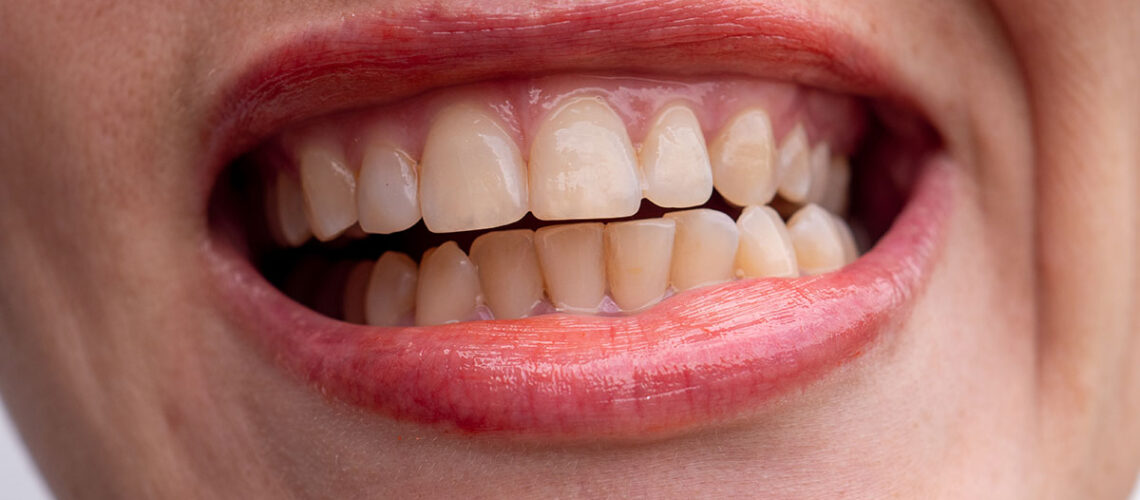
Deep stains on teeth can be frustrating. You brush, you floss, you try whitening strips — yet the dark patches, banding, or deep yellow tones barely change. That’s because not all stains come from the same place. Some sit on the surface and respond well to whitening. Others are embedded deep within the enamel or dentin and require a completely different approach.
In this article, our dental team explains the best ways to remove deep stains on teeth, how to tell when whitening will work, and when more advanced treatments are needed. By understanding the type of stain you have, you can choose the most effective and predictable treatment for a brighter, healthier smile.
Table of Contents
A Quick Way to Understand Deep Stains (Comparison Table)
To choose the most effective treatment for tooth discoloration, dentists first identify where the stain is located. Stains can sit on the surface, soak into the enamel, or originate inside the tooth itself. Each type responds best to different approaches.
| Type of Stain | Location of Stain | Responds Best To | Predictability |
|---|---|---|---|
|
Extrinsic (surface) |
On top of enamel |
Cleaning, polishing, whitening |
Excellent |
|
Deep extrinsic |
Embedded within enamel |
Whitening, microabrasion |
Good |
|
Intrinsic (internal) |
Inside enamel or dentin |
Whitening (limited), veneers, bonding |
Variable |
|
Tetracycline / developmental stains |
Internal layers |
Veneers, cosmetic restorations |
Poor |
|
Trauma or root canal darkening |
Inside the tooth |
Internal bleaching |
Good to excellent |
* Results may vary based on tooth structure, shade, and cause.
What Counts as a “Deep Stain”?
A deep stain is any discoloration that sits beneath the outer enamel surface rather than just on top of it. These stains are embedded within the enamel or dentin, which makes them behave differently than simple surface stains from coffee, tea, or everyday habits.
Deep stains often show up as:
- Brown, grey, or yellow patches
- Horizontal banding or streaks
- White or brown spots and uneven speckling
- General darkening of a single tooth
They may affect one tooth or several and can develop gradually or be present since childhood.
Identifying whether a stain is surface-level or internal helps determine which treatments are most effective and ensures you choose an approach matched to the true depth and cause of the discoloration.
Why Deep Stains Form
Deep stains can come from everyday habits or from changes that occur within the tooth itself. Understanding the source helps determine which treatments will be most effective.
Lifestyle-Related Causes
Some stains begin on the surface but gradually work their way into the enamel, becoming harder to remove over time. Common contributors include:
- Coffee, tea, and red wine
- Dark sodas and energy drinks
- Smoking or vaping
- Highly pigmented foods like berries, curry, and soy sauce
- Tartar buildup, which absorbs and traps stain particles
These stains often darken gradually and may affect multiple teeth.
Developmental or Structural Causes
These stains form inside the tooth, making them intrinsic in nature. They can appear early in life or develop later due to changes in the tooth’s internal structure.
- Tetracycline or childhood antibiotic exposure
- Fluorosis (white or brown spots from excess fluoride during development)
- Enamel hypoplasia (thin or weakened enamel)
- Trauma, which can cause internal darkening
- Aging, as dentin thickens and naturally darkens
- Root canal treatment, which can cause a single tooth to appear darker
Intrinsic stains often require more advanced or cosmetic treatments because the discoloration lies beneath the enamel surface.
Extrinsic vs Intrinsic Stains
Not all stains behave the same way. Knowing whether a stain is on the surface or inside the tooth is what guides a dentist’s treatment plan.
Extrinsic (Surface-Level) Stains
These sit on top of the enamel and are usually caused by foods, drinks, smoking, or plaque buildup.
They typically respond well to:
- Professional cleaning
- Polishing
- Whitening treatments
Intrinsic (Internal) Stains
These are embedded within the enamel or dentin and are often caused by trauma, aging, developmental conditions, or certain medications.
Because they lie deeper, they may require:
- Microabrasion
- Internal bleaching
- Bonding or veneers
Correctly identifying the stain type ensures you choose the right treatment and see meaningful, predictable results.
The Best Ways to Remove Deep Stains
Different stains respond to different treatments. Dentists look at the depth, cause, and location of discoloration to choose the most effective method. Here’s a clear breakdown of what works best for each type.
Dental Cleaning and Polishing
Best for: Brown gumline stains, smoking stains, coffee/tea buildup
A professional cleaning is often the first step before any whitening. Scaling removes tartar that traps pigments, and polishing lifts surface stains, leaving the enamel smoother and better prepared for further treatments.
Professional Whitening (In-Office & Take-Home Trays)
Best for: Deep extrinsic stains, generalized yellowing, age-related discoloration
Dentist-supervised whitening can brighten teeth by several shades (especially for yellowed teeth) using high-quality peroxide gels and custom-fitted trays.
Why it’s effective:
- Penetrates enamel more deeply than store-bought products
- Custom trays ensure uniform coverage
- Uses safe, controlled peroxide concentrations
More limited for:
- Grey or blue-toned stains
- Tetracycline banding
- Strong intrinsic discoloration
Microabrasion
Best for: Mild fluorosis, white or brown spots, shallow intrinsic stains
Microabrasion gently removes a thin, superficial layer of enamel. This helps smooth out patchy areas and reduce visible speckles or spots that do not lighten evenly with whitening.
Internal Bleaching
Best for: A single darkened tooth after trauma or root canal therapy
With internal bleaching, whitening gel is placed inside the tooth to lighten the dentin. This method is uniquely effective for non-vital teeth that darken from the inside out.
Dental Bonding
Best for: Localized deep stains or specific areas that whitening cannot lift
Bonding uses tooth-coloured composite to mask small, stubborn stains. It’s minimally invasive, affordable, and ideal when only a few spots need cosmetic improvement.
Veneers
Best for: Deep intrinsic stains, tetracycline staining, fluorosis, and multi-tooth cosmetic concerns
Veneers cover the front surfaces of the teeth with thin porcelain shells. They are highly effective for staining that does not respond predictably to bleaching.
Advantages include:
- Bright, consistent colour
- Natural translucent appearance
- Reliable long-term results
Crowns
Best for: Teeth with severe staining plus structural wear, cracks, or large fillings
Crowns completely cover the tooth, masking dark stains while restoring strength. They are ideal when both cosmetic improvement and structural reinforcement are needed.
What Treatment Is Best for Your Stains?
Here’s a quick way to identify which treatment category your stains may fall into. While a dental exam provides the most accurate diagnosis, these general guidelines help point you in the right direction.
If your stains are mostly brown near the gums → Cleaning + polishing
These stains often come from coffee, tea, smoking, or plaque buildup. A professional cleaning usually removes them effectively.
If your teeth are yellow overall → Professional whitening
Yellowing responds very well to peroxide-based whitening and often shows the most noticeable improvement.
If you have white or brown enamel spots → Microabrasion + whitening
This combination helps smooth out patchy areas and create a more uniform brightness.
If one tooth is darker than the rest → Internal bleaching
A single dark tooth often indicates trauma or a previous root canal. Internal bleaching targets the discoloration from the inside.
If whitening makes little difference → Bonding or veneers
Minimal improvement usually signals intrinsic staining that sits deeper in the enamel or dentin. Cosmetic treatments can provide a more reliable colour match.
If stains are grey, banded, or extremely dark → Veneers or crowns
These patterns are common with tetracycline stains or developmental defects. Porcelain restorations offer the most predictable cosmetic result.
Ontario Cost Expectations
Many clinics use the ODA fee guide as a reference point, but pricing varies by clinic and case. Below are typical ranges to help you understand what to expect for different stain-removal and cosmetic treatments.
| Treatment | Typical Cost in Ontario (CAD) | Notes |
|---|---|---|
|
Professional cleaning + polishing) |
$150–$300 |
Often the first step before whitening; removes surface stains and buildup. |
|
Professional whitening (take-home trays) |
$250–$500 |
Custom trays offer controlled, gradual whitening with long-term results. |
|
In-office whitening |
$400–$900 |
Faster and more dramatic; ideal for patients wanting immediate improvement. |
|
Microabrasion |
$150–$450 per tooth |
Used for white or brown spots and shallow intrinsic stains. |
|
Internal bleaching |
$250–$500 per tooth |
For darkening after trauma or root canal treatment. |
|
Dental bonding |
$200–$500 per tooth |
Effective for masking small, localized deep stains. |
|
Porcelain veneers |
$1,000–$2,500 per tooth |
Best for deep intrinsic stains, tetracycline staining, or cosmetic makeovers. |
|
Crowns |
$1,200–$2,000+ |
Recommended when a tooth needs both stain coverage and structural reinforcement. |
Notes
- Most insurance plans cover cleanings, examinations, and sometimes internal bleaching if medically needed.
- Whitening, microabrasion, bonding (cosmetic cases), and veneers are usually not covered because they are elective cosmetic procedures.
- Crowns may be covered when required for function, not just appearance.
These ranges provide a general idea, but your dentist can offer a personalized estimate based on your tooth condition and treatment goals.
What Whitening Cannot Fix
Whitening can brighten many types of discoloration, but it does have limitations. Some stains lie too deep within the tooth structure or originate from conditions that peroxide cannot lighten effectively.
Whitening will NOT fully correct:
- Grey or blue tetracycline staining
- Deep brown fluorosis or developmental patches
- Enamel defects, such as hypoplasia or mottling
- Traumatic discoloration in teeth with a living nerve
- Any stains on restorations, including crowns, veneers, or fillings
These types of discoloration often require alternative cosmetic options to achieve predictable, even results. Treatments like bonding, microabrasion, veneers, or crowns provide better long-term colour consistency when whitening alone cannot make a noticeable change.
How to Prevent Deep Stains from Returning
Once stains are removed, a few simple habits can help keep your teeth brighter for longer. Consistency plays a key role in preventing pigments from settling back into the enamel.
Daily Habits
- Brush twice a day with fluoride toothpaste to remove fresh surface stains.
- Floss daily to clear stain-holding plaque between the teeth.
- Rinse with water after coffee, tea, wine, or acidic foods to limit absorption into enamel.
Lifestyle Modifications
- Minimize smoking or vaping, as these create persistent brown staining.
- Use a straw when drinking dark or acidic beverages to reduce contact with the front teeth.
- Avoid frequent sipping of coffee or tea throughout the day, which increases staining exposure.
Maintenance Care
- Touch-up whitening every 6–12 months helps maintain brightness, especially for coffee or tea drinkers.
- Regular dental cleanings prevent plaque and tartar from trapping pigments.
- Avoid abrasive home remedies like charcoal, lemon juice, or vinegar — these can damage enamel and worsen staining over time.
Quick Takeaways
- Deep stains aren’t all the same. Some sit on the surface and respond well to cleaning or whitening, while others are embedded inside the enamel or dentin and may need more advanced treatment.
- Identifying the stain type is essential. A dentist can quickly determine whether your discoloration is extrinsic, intrinsic, developmental, or trauma-related.
- Professional whitening works best for yellowing and deep extrinsic stains. More complex or patchy stains may benefit from microabrasion, bonding, veneers, or internal bleaching.
- Veneers and crowns provide the most predictable results for very dark, grey, or banded discoloration that whitening cannot fully address.
- Good daily habits and regular cleanings help prevent new stains from settling back into enamel and keep treatment results lasting longer.
Final Thought
A brighter smile starts with understanding what’s causing the discoloration. With the correct diagnosis and a personalized treatment plan, deep stains can be managed effectively — whether that means whitening, cosmetic treatment, or a combination of approaches. If you’re unsure which option fits your situation, a dental evaluation will give you clear answers and a confident path forward.
Frequently Asked Questions
Yes. Stains can reappear over time, especially with frequent exposure to coffee, tea, red wine, or smoking. Touch-up whitening every 6–12 months and regular cleanings help maintain brightness and prevent pigments from settling back into enamel.
Intrinsic stains tend to appear deeper in colour, patchy, or greyish and do not lighten much even with professional whitening. They may also follow a banded or speckled pattern. A dentist can confirm this quickly using shade guides and clinical evaluation.
Yes. Modern porcelain veneers are designed to mimic tooth enamel with natural translucency and shading. Even when masking very dark stains, your dentist selects the right thickness and ceramic type to achieve a realistic, balanced look.
Bonding is durable but not permanent. Composite resin can last several years before needing polishing or replacement. It is a good option for smaller areas of discoloration but may not be ideal for large or very dark stains.
No. Tetracycline staining affects the internal structure of developing teeth and extends too deeply for internal bleaching to correct. Veneers or crowns provide the most predictable cosmetic improvement.
Whitening temporarily dehydrates enamel, which can make white spots look more noticeable. As the enamel rehydrates over a day or two, these areas blend more evenly and the final shade becomes more uniform.
Yes. As enamel thins naturally over time, the underlying dentin—which is more yellow—becomes more visible. Lifestyle factors like coffee or tea consumption also compound staining over the years.
An electric toothbrush can remove surface stains more effectively, preventing them from becoming deeply embedded. While it won’t remove intrinsic stains, it helps maintain long-term brightness.
Not always. Some deep stains relate to enamel defects, but others come from internal dentin changes or long-term pigment exposure. Staining alone is not a reliable indicator of enamel strength.
Yes. If the margins of an old filling begin to leak, pigments can penetrate underneath and cause localized darkening. These cases often require replacement of the filling rather than whitening.
Front teeth usually whiten more predictably because they have thinner enamel and are more visible to light. Back teeth can also lighten but may take longer due to thicker enamel and different mineral density.
Deep intrinsic discoloration can make enamel appear more translucent, especially near the biting edges. Whitening may brighten these areas slightly, but veneers offer the most reliable improvement in translucency.
Most dentists recommend spacing whitening cycles several months apart, or following a supervised schedule using custom trays. Overuse may increase sensitivity without improving results.
No. Home remedies like charcoal, baking soda, or fruit acids only affect surface-level stains and may damage enamel if used frequently. Deep stains require clinical treatment for safe, predictable improvement.
Check us out on Facebook and Twitter for daily information about Oral Health from Martindale Dental, or visit our offices in Hamilton and St. Catharines.
Have more questions?
Please contact us for all inquiries or to book an appointment with one of our convenient clinic locations. We look forward to hearing from you.