
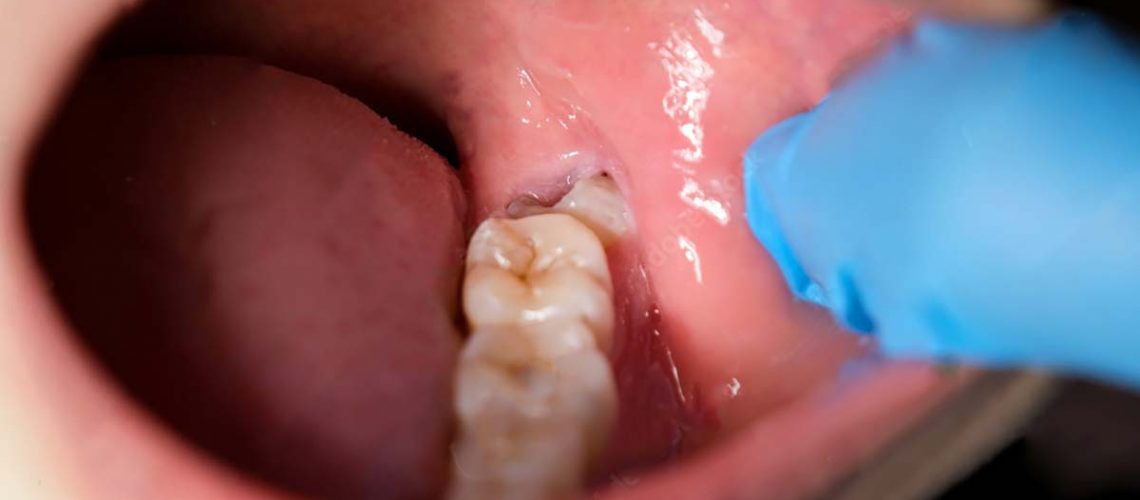
Not every wisdom tooth has to come out. Some settle in and cause no trouble at all. The problem is that the ones that do cause trouble often send early warning signs that are easy to miss or wave off. This guide walks through the signs that mean it is time to get checked, the signs that mean see a dentist right away, and, just as importantly, the cases where your wisdom teeth can safely stay put.
How do you know if your wisdom teeth need to be removed?
The most common signs are pain or aching at the very back of the mouth, red or swollen gums around a partly erupted tooth, a bad taste or bad breath that keeps coming back, jaw stiffness, and new crowding or pressure on nearby teeth. Any of these is a reason to get an X-ray and an opinion. Spreading swelling, pus or a fever means you should be seen promptly, as that points to infection.
Wisdom teeth are the last molars to arrive, usually between the ages of 17 and 25, and the mouth is often too small to fit them. According to the American Association of Oral and Maxillofacial Surgeons, about 9 in 10 people have at least one wisdom tooth that does not have room to come in properly, which is why signs of trouble are so common. For the full overview of the teeth themselves, the procedure and recovery, see our guide to wisdom teeth removal and recovery.
10 signs your wisdom teeth may need to come out
Rarely do all of these appear at once. Usually it is one or two, and they tend to come and go, which is why people put off dealing with them. Here is what to look and feel for.
1Pain at the back of the mouth
An ache, throb or tenderness behind your last molars is the most common first sign. It may be constant or come in waves, and it can flare when you chew.
2Red, swollen or bleeding gums
When a tooth only partly breaks through, a flap of gum can trap food and bacteria. The gum around it becomes sore, puffy and may bleed when you brush. This is called pericoronitis.
3A bad taste or bad breath
Food and bacteria caught around a hard-to-clean wisdom tooth give off a foul taste or persistent bad breath that brushing does not fully fix.
4A stiff or sore jaw
Swelling and inflammation can make the jaw stiff and sore, and sometimes make it hard to open your mouth fully or chew comfortably.
5Crowding or shifting teeth
A wisdom tooth pushing against the molar in front can create a feeling of pressure, and over time may contribute to crowding or a change in how your teeth meet.
6Repeated infections or pus
Infection that keeps returning in the same spot, or any pus or white discharge around the tooth, is a clear signal the tooth is causing problems.
7Decay or a dark spot
Because they sit so far back, wisdom teeth are hard to clean and prone to cavities. Decay can also form on the back of the healthy molar in front of them.
8Sinus pressure or headaches
Upper wisdom teeth sit close to the sinuses. When they press upward, some people notice sinus pressure, congestion or headaches on that side with no other cause.
9Pain that radiates
Trouble at the back of the mouth can refer outward, showing up as an earache or a headache on the same side rather than obvious tooth pain.
10A cyst found on an X-ray
An impacted tooth can form a fluid-filled sac around it. You may feel nothing, but left alone a cyst can slowly damage bone and nearby teeth, which is why X-rays matter.
An important catch: you can have a problem with no pain at all
An impacted wisdom tooth can sit quietly for years and still be causing decay or pressure you cannot feel. That is exactly why dentists take a wide X-ray even when nothing hurts. No pain does not always mean no problem.
How urgent is it? A simple way to sort the signs
Not every twinge means surgery, and not every symptom can wait. Here is a rough guide to how quickly to act. When in doubt, a phone call is free and settles it.
Monitor at checkups
- Mild, occasional tightness as a tooth erupts
- No swelling, and the area stays clean
- Tooth is coming in straight and you can brush it
Get it checked
- Pain or soreness that keeps returning
- Food constantly trapping behind the tooth
- A bad taste, mild swelling or a cavity
- New crowding or pressure on other teeth
Do not wait
- Spreading swelling in the gum, jaw or cheek
- Pus, fever or feeling generally unwell
- Severe pain, or trouble opening your mouth
- Difficulty swallowing or breathing (seek urgent care)
When wisdom teeth can stay
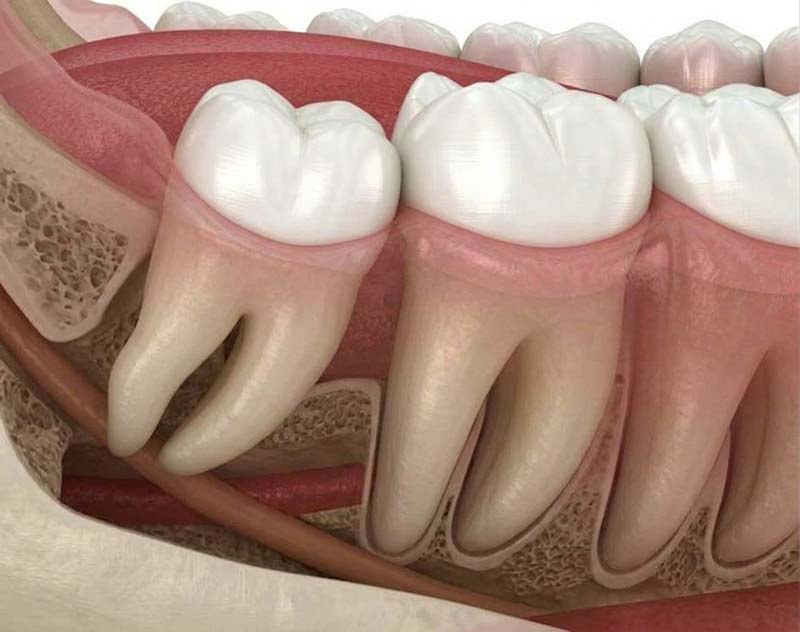
This is the part most "signs" articles skip, and it matters. A wisdom tooth does not need to be removed just for existing. According to the Mayo Clinic, you can usually keep a wisdom tooth when it is:
- Healthy, with no decay or gum disease around it
- Fully grown in, having erupted through the gum
- Correctly positioned and biting properly against the tooth above or below it
- Cleanable, meaning you can reach it to brush and floss as part of your normal routine
If it ticks those boxes, watching is reasonable
A tooth that is healthy, well placed and easy to clean can often be left alone and simply reviewed at your regular checkups. The decision is about whether the tooth is causing disease or is likely to, not about the tooth itself.
The catch is that the back of the mouth is genuinely hard to keep clean, so a wisdom tooth that is fine today can develop decay or gum trouble later. Keeping up six-month checkups is how that gets caught early.
Normal eruption vs a wisdom tooth problem
Wisdom teeth coming in can be uncomfortable without anything being wrong. Here is how ordinary eruption compares with signs worth acting on.
| Usually just eruption | Worth getting checked |
|---|---|
| Mild tightness or pressure at the back that passes in a few days | Pain that keeps returning, lingers, or gets worse over time |
| Slight tenderness in the gum as the tooth breaks through | Gum that stays red, swollen, bleeding, or has a flap trapping food |
| A tooth coming in straight that you can reach to brush | A tooth that is angled, stuck, or impossible to clean properly |
| No swelling of the face or jaw, and no fever | Facial or jaw swelling, pus, a bad taste that will not clear, or fever |
What happens if you ignore the signs
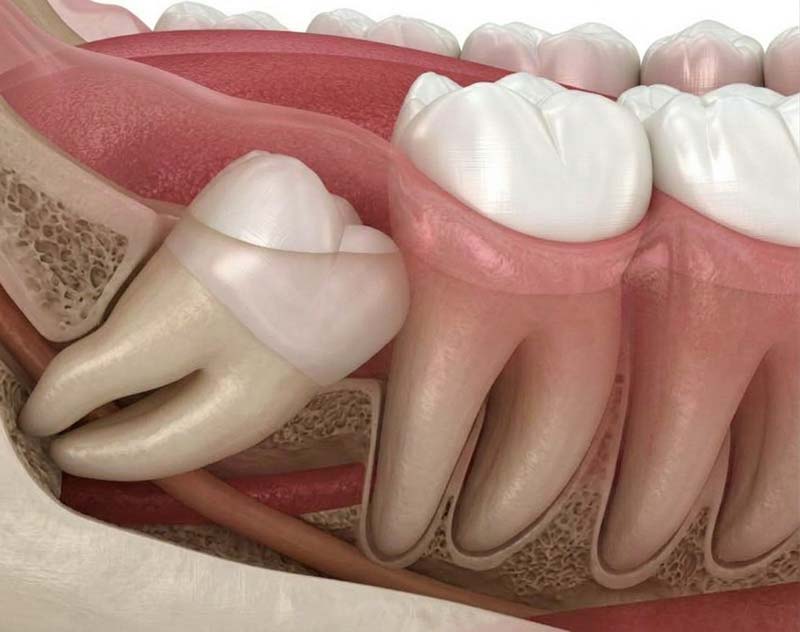
A sore wisdom tooth that keeps flaring is not just a nuisance. When a tooth is impacted or impossible to clean, problems tend to build rather than go away. Left unaddressed, an impacted or diseased wisdom tooth can lead to:
- Infection and abscess. The trapped flap of gum (pericoronitis) can become infected repeatedly, and infection can spread to the surrounding tissue
- Decay in the tooth next door. A wisdom tooth pressed against your second molar can cause cavities on a healthy tooth that was never at risk
- Gum disease in an area you cannot clean, which can affect the neighbouring teeth
- Cysts that damage bone. A fluid-filled sac around an impacted tooth can slowly erode the jawbone and the roots of nearby teeth, and in rare cases a growth can develop
- A harder removal later. As you age the roots finish forming and the jawbone becomes denser, which tends to make extraction and recovery more involved than it would have been earlier
Waiting does not usually make it easier
Unlike many aches that resolve on their own, a problem wisdom tooth rarely sorts itself out, because the underlying issue, not enough room, does not change. Getting it assessed early keeps your options open.
Why dentists check wisdom teeth in your late teens
If you have a teenager, you may have heard the dentist mention wisdom teeth before anything hurts. There is a good reason for the timing. The Mayo Clinic notes that when removal is needed, it is often easier between the ages of roughly 15 and 22, because:
- The roots are not fully formed yet, so the tooth is easier to remove
- The surrounding bone is less dense
- Younger patients tend to heal faster
This is why a dentist will often take a panoramic X-ray in the late teens to see how the wisdom teeth are developing and whether there is room for them. Checking early is not the same as removing early. It simply means a problem can be caught before it becomes painful, and the decision can be planned rather than rushed.
Do wisdom teeth always need to be removed?
No. This is a genuine point of debate in dentistry, and it is worth being clear about. Removing wisdom teeth that are impacted but completely healthy and symptom-free, purely as a precaution, is not automatically the right call for everyone. Many such teeth are simply monitored.
Where there is wide agreement is that removal makes sense when there is a real problem or a clear risk of one: repeated infections, decay that cannot be managed, gum disease, a cyst, damage to the tooth in front, or a tooth that cannot be kept clean. In those cases, taking the tooth out solves a problem that is otherwise likely to keep returning.
The honest version
The right answer depends on your own mouth, your X-ray, your age and your symptoms. A good dentist will walk you through why removal is or is not recommended in your case, rather than treating it as a given. If you are unsure, it is a fair question to ask directly.
Not sure if yours need to come out?
If you are noticing any of these signs, our Hamilton team can take an X-ray, tell you exactly what your wisdom teeth are doing, and lay out your options. No pressure, just a clear answer.
Keep reading
Signs your wisdom teeth need removal, frequently asked questions
Good to know
This article is general information and is not a substitute for advice from your own dentist, who will assess your X-ray and symptoms and give guidance specific to your case. The information here is consistent with these authoritative sources:
- Mayo Clinic – Wisdom teeth removal: When is it necessary?
- Cleveland Clinic – Impacted Wisdom Teeth
- American Association of Oral and Maxillofacial Surgeons (AAOMS) – Wisdom Teeth Management