
If you are a few days past a tooth extraction and the pain is suddenly getting worse instead of better, you may be worried about dry socket. The good news: it is uncommon, it is treatable, and it always heals. This guide explains what dry socket actually feels like, how to tell it apart from normal healing, when the risk passes, and what to do about it.
How do you know if you have dry socket?
The clearest sign is pain that improves for a day or two after your extraction, then gets noticeably worse, often throbbing toward the ear, along with a bad taste or odour. Normal healing pain steadily fades. Dry socket pain comes back and intensifies, usually around day two to four. If that sounds like you, call your dentist, because it is easily treated.
What is dry socket?
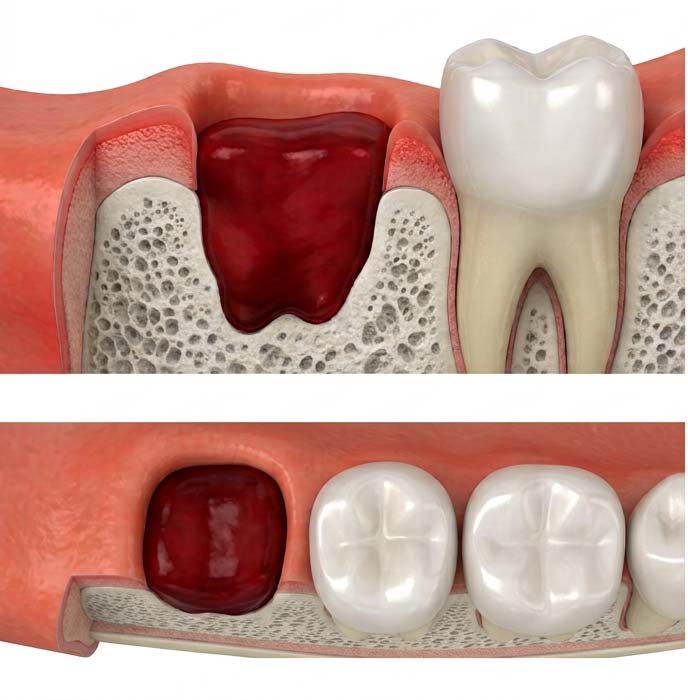
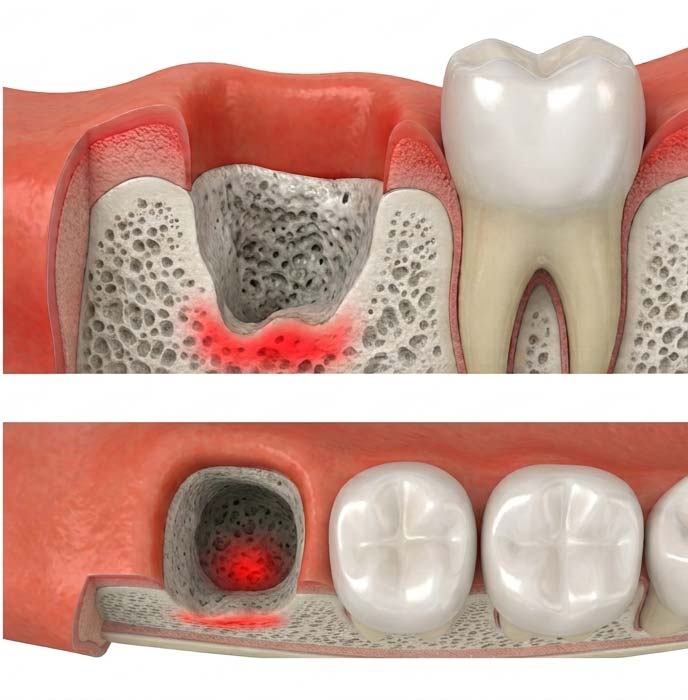
Dry socket, or alveolar osteitis, happens when the blood clot that should protect a healing extraction site is lost too early, dissolves, or never forms properly. That clot normally shields the bone and nerve endings underneath while the area heals. Without it, the bone and nerves are left exposed to air, food and liquid, which causes the sharp, aching pain dry socket is known for.
It is the most common complication after a tooth extraction, but it is still uncommon overall, affecting roughly 2 to 5 percent of extractions. It is more likely after the removal of lower wisdom teeth than other teeth. For the full picture of what normal recovery looks like, see our guide to wisdom teeth removal and recovery.
Not yet had your extraction? See the signs your wisdom teeth need to be removed, how urgent each one is, and when they can safely stay.
What does dry socket feel like?
Dry socket has a fairly recognizable set of symptoms. You may notice:
- Severe, throbbing pain at the extraction site, often starting a few days after surgery
- Pain that radiates from the socket toward your ear, eye, temple or neck on the same side
- A bad taste in your mouth, often described as foul or metallic
- Bad breath or an unpleasant odour coming from the area
- An empty-looking socket where the dark blood clot appears to be missing, sometimes with a glimpse of whitish bone
A mild, low-grade fever can occasionally accompany dry socket. A higher fever, above about 38.3°C (101°F), is more likely a sign of infection and should be checked by your dentist promptly.
The most reliable clue is the timing of the pain
More than any single symptom, it is the pattern that gives dry socket away: your pain was settling, and then around day two to four it returned and got worse. That reversal is the signal to call your dentist.
Normal healing pain vs dry socket
Some soreness, swelling and tenderness are a completely normal part of healing after an extraction. Here is how ordinary recovery compares with dry socket.
| Normal healing | Possible dry socket |
|---|---|
| Pain peaks in the first day or two, then steadily improves | Pain improves at first, then returns and gets worse around day 2 to 4 |
| Soreness is dull and manageable with over-the-counter pain relief | Pain is intense and throbbing, often spreading to the ear or temple |
| A dark blood clot sits in the socket; a whitish film over it is normal healing tissue | The socket looks empty, and you may see pale bone instead of a clot |
| Any taste or odour clears with gentle salt-water rinsing | A persistent foul taste or smell that rinsing does not fix |
Can you tell if you have dry socket by looking in your mouth?
This is one of the most common worries, and the honest answer is: not reliably. It is very difficult to diagnose dry socket by sight alone, even for a dentist, which is why it is identified mainly from your symptoms. A few things are worth knowing before you spend the evening staring into a mirror with a flashlight:
- A whitish or creamy film is usually normal. As the socket heals it is often covered by pale granulation tissue, which many people mistake for exposed bone or an infection. It is a good sign, not a bad one.
- Food collecting in the socket is normal too. It happens to almost everyone and is not the same thing as dry socket. Gentle warm salt-water rinsing helps keep it clean.
- An open-looking hole does not mean something is wrong. The socket takes weeks to fill in, so seeing a hole, even a fairly deep one, is expected during healing.
Go by how it feels, not how it looks
If the area looks open or pale but there is little or no pain, dry socket is unlikely. It is the return of strong pain, with a bad taste, that matters. When in doubt, your dentist can tell in a moment what a mirror cannot.
When does dry socket happen, and when can you stop worrying?
Dry socket tends to show up in a fairly specific window, which is reassuring once you know it:
- Onset: symptoms usually begin around day 2 to 4 after the extraction, occasionally as early as the first day. Tellingly, it tends to appear right when the pain should be easing.
- When the risk fades: the highest-risk period is the first few days. By about day 5 the risk drops considerably, and dry socket is uncommon once you are past the first week, as the socket fills with protective tissue.
- How long it lasts: once treated, the pain usually settles within a day or so, and the socket continues to heal over about 7 to 10 days.
So if you are a week out, feeling steadily better, and your pain is fading rather than building, you are very likely in the clear. Everyone heals a little differently, so use this as a guide alongside your own dentist's instructions.
What causes dry socket, and who is most at risk?
Dry socket comes down to the blood clot being disturbed or failing to form. Some causes are in your control and some are not. You are at higher risk if you:
Smoke or vape
One of the strongest risk factors. Smokers are about three times more likely to get dry socket. More on this below.
Use straws or spit forcefully
The suction and pressure can pull the clot right out of the socket.
Take estrogen-containing birth control
Higher estrogen levels can break down blood clots, which is also why dry socket is somewhat more common in women.
Had a difficult or lower extraction
Surgical or impacted removals, especially lower wisdom teeth, carry more risk than simple upper extractions.
Have an infection or poor oral hygiene
Existing gum disease or bacteria around the site can interfere with clot formation.
Have had dry socket before
A previous dry socket makes another one more likely, so take extra care and tell your dentist.
Older adults also tend to be at somewhat higher risk than teenagers. If several of these apply to you, let your dentist know before your extraction so they can take extra precautions.
Smoking, vaping and cannabis after an extraction
This comes up more than any other question, so it is worth being clear. Smoking and vaping are among the biggest avoidable causes of dry socket, for two reasons. First, the sucking action draws on the socket and can dislodge the clot. Second, nicotine narrows your blood vessels and reduces blood flow to the healing site, which slows healing on its own.
- How long to wait: avoid smoking and vaping for at least 72 hours, and longer if you possibly can. The more days you give it, the lower your risk.
- Vaping is not a safe substitute. It involves the same suction and heat, so it carries the same risk as cigarettes.
- Nicotine-free or nose-hit workarounds are not reliable. They still involve suction, heat or nicotine from other sources, and they are not worth the gamble on a fresh socket.
- Cannabis is no exception. Smoking it carries the same suction and heat risks. Edibles avoid those, but check first for any interaction with medications you were given, and it is still wise to wait while the clot sets.
The honest takeaway
There is no genuinely safe way to smoke or vape over a fresh extraction. If you can treat it as a reason to pause for a few days, your mouth, and your pain levels, will thank you.
How to prevent dry socket
Most prevention is simply protecting the clot in the first several days. These steps make a real difference:
- Skip straws for about a week, since the suction can dislodge the clot
- Do not smoke or vape for at least 72 hours, and ideally longer
- Avoid forceful spitting and vigorous rinsing. For the first day, let water fall gently from your mouth rather than spitting
- After the first 24 hours, rinse gently with warm salt water (about half a teaspoon of salt in a cup of water) a few times a day and after meals
- Stick to soft, cool foods and avoid hard, crunchy, chewy or spicy items, plus small particles like seeds and rice that can lodge in the socket
- Rest and keep your head slightly elevated for the first few days, and ease back into activity gradually
- Avoid alcohol and carbonated drinks while you heal
- Keep up gentle oral hygiene, brushing your other teeth and carefully avoiding the socket
- Only use an irrigation syringe if your dentist gives you one, and only when they say to start, usually a few days in, never right after surgery
For a full week of meal ideas that protect the clot, see what to eat after wisdom teeth removal. For how soon it is safe to work out again, see how long to wait to exercise after a tooth extraction.
Even careful people sometimes get it
Dry socket can happen even when you do everything right, so if it does, it is not your fault. It is a known complication, not a sign you failed at aftercare.
What to do if you think you have dry socket
If the signs point to dry socket, call your dentist. It is a quick problem to treat, and treatment usually brings fast relief. Here is what to expect:
- Your dentist examines the socket and confirms the diagnosis from your symptoms
- They gently flush out the socket to clear any food and debris
- They place a medicated dressing in the socket, which often eases the pain quickly. The dressing may be changed every few days until the pain settles
- They review your pain plan, and antibiotics are added only if there are signs of infection
About pain relief
For this kind of pain, studies have found that taking acetaminophen and ibuprofen together can be more effective than prescription opioids. Follow the dosing your dentist or pharmacist recommends, and do not exceed the limits on the package.
Does dry socket heal on its own?
Yes. Even without treatment, dry socket eventually heals as the tissue grows back, usually over a week to ten days. The reason to see a dentist is not that it is dangerous, but that treatment dramatically reduces the pain and rules out infection, so there is little reason to tough it out.
What about honey, clove oil and other home remedies?
You will find plenty of home remedies online, from clove oil to honey. The evidence for them is limited, and some carry real downsides: clove oil is strong, and applying it directly or too often can irritate or even burn the tissue and slow healing. The safe home measure is gentle warm salt-water rinsing. Do not try to pack or medicate the socket yourself, and see your dentist for anything stronger, since the in-office dressing is both more effective and safer.
When to call your dentist
Get in touch with your dentist or surgeon if you notice any of the following:
- Pain that gets worse after the first couple of days, or that your pain relief is not controlling
- A persistent foul taste or odour that rinsing does not clear
- A fever above about 38.3°C (101°F), spreading swelling, or pus from the socket, which can signal infection
- Pain bad enough to keep you awake or stop you eating
Seek urgent care if you have difficulty breathing or swallowing, or swelling that spreads quickly. These are rare but need prompt attention.
Worried it might be dry socket?
If your pain has taken a turn for the worse after an extraction, our Hamilton team can take a look and bring you relief quickly. Give us a call.
Keep reading
Dry socket, frequently asked questions
Good to know
This article is general information and is not a substitute for advice from your own dentist or surgeon, who will give you guidance specific to your case. The information here is consistent with these authoritative sources:
- Mayo Clinic – Dry socket: Symptoms and causes
- Cleveland Clinic – Dry Socket: Symptoms, Causes & Treatment
- Harvard Health – Dry socket: Preventing and treating