
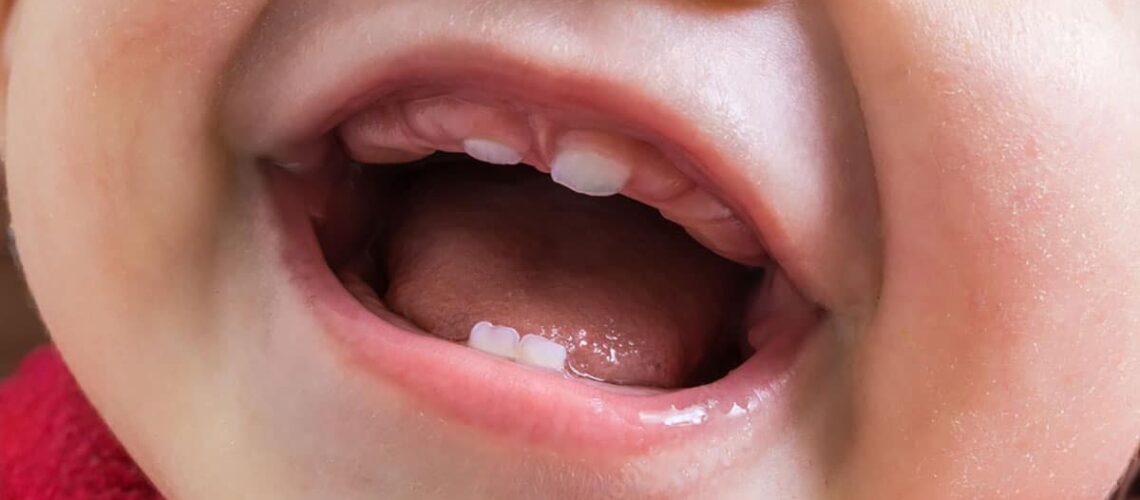
Infancy (0–12 Months)
This is the beginning of your child’s dental journey. Even before teeth appear, the necessary groundwork is laid for oral health. Teething starts, and your baby’s first tooth coming in marks the first major dental milestone.
Key Milestones:
- Gum care begins: Wipe gums with a clean, damp cloth after feedings to reduce bacteria and promote oral hygiene.
- First tooth eruption: Typically occurs between 4–10 months, most often the lower front teeth (central incisors).
- Teething symptoms begin: Increased drooling, fussiness, swollen gums, and changes in chewing behaviour are common.
- First toothbrush: Begin brushing when the first tooth erupts using a soft-bristled brush and a smear of fluoride toothpaste.
- First dental visit: Should be scheduled by age 1 or within six months of the first tooth, according to the American Academy of Pediatric Dentistry (AAPD).
Toddlerhood (1–3 Years)
By age 3, most toddlers will have a full set of 20 baby teeth. This phase focuses on establishing oral hygiene habits and preventing early childhood cavities. Their diet can also begin to really affect how they meet their dental milestones going forward (more info on that here).
Key Milestones:
- Full set of primary teeth: Usually complete by age 3, including incisors, canines, and molars.
- Increased teething with molars: Back molars are often the last to emerge and can cause more discomfort.
- Daily brushing routine: Use a pea-sized amount of fluoride toothpaste and brush twice daily with a toddler-friendly toothbrush.
- Start flossing: Begin as soon as two teeth touch to prevent plaque buildup between teeth.
- Avoid bottle in bed: Prevent “baby bottle tooth decay” by eliminating bedtime bottles with milk or juice.
- Thumb sucking and pacifiers: Begin gently discouraging these habits to avoid long-term bite issues.
- Pay attention to diet: Ensure a well-rounded and mostly sugar-free diet for the best oral health.
Preschool Age (3–6 Years)
Preschoolers gain more independence and begin taking part in their oral care. Speech development, dietary changes, and habit awareness all affect their dental health.
Key Milestones:
- Refining brushing skills: Children begin brushing on their own, though adult supervision is still necessary.
- Improved fine motor skills: Helps with better brushing and learning how to floss correctly.
- Awareness of hygiene routines: Kids begin to understand the purpose of brushing and flossing, especially with parent modelling.
- Reduction of thumb sucking/pacifier use: Stopping habits like thumb sucking now can prevent alignment issues later.
- Regular dental checkups: Every 6 months for cleanings, fluoride treatments, and early detection of decay or bite problems.

Early School Age (6–9 Years)
This is a significant transition stage as baby teeth fall out and permanent teeth come in. Children are more independent, but they still need guidance to develop good brushing and flossing habits.
Key Milestones:
- Losing baby teeth: Typically begins around age 6, starting with the front teeth.
- First permanent molars (6-year molars): These come in behind the baby teeth and are critical for alignment and chewing.
- Mixed dentition phase: A mix of baby and adult teeth makes oral hygiene more complex.
- Dental sealants: Often recommended for new molars to prevent cavities in deep grooves.
- Improved hygiene habits: Reinforce brushing for 2 minutes twice daily and introduce flossing independently.
- Start orthodontic monitoring: Subtle spacing or bite concerns may begin to appear and can be addressed early.
- Place more emphasis on diet: Around this age, children often crave sweets and other junk food, making it very important to monitor what they eat for the sake of their teeth and oral health.
Late Childhood (9–12 Years)
Most permanent teeth have emerged, and the jaw continues growing. Children become more self-aware and social, making dental health even more important for their self-esteem and development.
Key Milestones:
- All adult teeth erupt (except wisdom teeth): Usually complete by age 12.
- Second molars (12-year molars): Erupt behind the first molars and require special care to keep cavity-free.
- Pre-braces evaluation: Dentists may refer to an orthodontist if crowding, spacing, or bite issues are visible.
- Greater responsibility for oral care: Children should be able to brush and floss effectively on their own.
- Watch for diet-related decay risks: Increased independence often leads to an increase in sugary snacks and drinks.
- Sports protection: If active in sports, a custom mouthguard is essential to protect teeth from injury.
Adolescence (13–18 Years)
The final phase of childhood dental development brings the end of orthodontic treatment and the possible eruption of wisdom teeth. Teens face new challenges, including busy schedules and lifestyle factors that can affect oral health.
Key Milestones:
- Completion of orthodontic treatment: Braces or aligners are typically finished by mid-teen years.
- Retainer use and maintenance: Critical for preserving tooth alignment post-braces.
- Wisdom teeth development: Begin forming beneath the gums; dental X-rays help monitor their growth.
- Risk of dental neglect: Academic, social, and extracurricular pressures can cause teens to skip brushing or dental visits.
- Independence in hygiene: Teens are fully responsible for brushing, flossing, and attending regular dental check-ups.
- Diet and oral health: High sugar intake (energy drinks, snacks) increases cavity risk—emphasize nutrition’s role in oral care.
- Oral health and self-image: Whitening, straightening, or cosmetic interests may emerge—discuss safe options with a dentist.
Red Flags To Watch Out For

While many dental milestones occur within a wide range of normal, certain signs may indicate that your child’s oral development needs closer attention. These “red flags” shouldn’t cause panic, but they do warrant a conversation with your pediatric dentist. Early identification can prevent future complications and support healthier outcomes for your child’s smile.
- No teeth by 12–18 months
While some babies are late bloomers, the absence of any teeth by 18 months may indicate delayed tooth eruption. Your dentist can evaluate if it’s due to genetics, nutritional deficiencies, or other underlying issues. - White or brown spots on baby teeth
These may be early signs of enamel demineralization or cavities. Spotting them early allows you to reverse the damage with fluoride or remineralization treatments. - Difficulty chewing or biting food
If your child avoids chewing on one side or shows discomfort while eating, it may indicate dental pain, infection, or misalignment. This can also affect nutrition if not addressed. - Frequent toothaches or sensitivity
Ongoing sensitivity to hot, cold, or sweet foods may suggest decay, enamel erosion, or exposed roots. Persistent discomfort always warrants a professional exam. - Delayed loss of baby teeth (after age 7–8)
While every child is different, baby teeth that don’t loosen or fall out on schedule can lead to crowding or blocked adult teeth. A dentist can assess whether intervention is needed. - Permanent teeth erupting behind baby teeth (“shark teeth”)
This is relatively common but should still be evaluated. If baby teeth aren’t loosening naturally, your dentist may recommend extraction to prevent misalignment. - Crowding, overlapping, or visibly crooked teeth
These signs of malocclusion may benefit from early orthodontic evaluation, sometimes even before all permanent teeth erupt. Intervening early can shorten or simplify future treatment. - Chronic bad breath (halitosis)
Persistent odour could be more than poor brushing—it may be a sign of cavities, gum disease, or even systemic health concerns. A dental exam can help rule out underlying causes. - Bleeding, swollen, or discoloured gums
These are classic signs of gingivitis or gum infection, even in children. Proper brushing, flossing, and professional cleaning are needed to reverse early-stage gum disease. - Persistent thumb sucking or pacifier use after age 4
These habits can lead to open bite, overbite, and changes to the palate. If your child struggles to stop, your dentist can offer supportive solutions or habit-breaking aids. - Jaw pain, popping, or clicking sounds
If your child complains of discomfort when chewing or you hear clicking from the jaw, it could signal TMJ (temporomandibular joint) issues, which require further evaluation. - Speech difficulties possibly linked to oral anatomy
Trouble pronouncing certain sounds, especially “s,” “th,” or “r,” may be related to tongue posture, missing teeth, or improper alignment. A dentist and speech therapist may both be helpful.
Common Myths About Kids’ Dental Development

Understanding the truth behind pediatric dental care can help parents make better decisions. Unfortunately, myths and outdated advice are still common. Let’s debunk some of the most widespread misconceptions:
Myth #1: “Baby teeth don’t matter—they fall out anyway.”
Why it’s not true
Baby teeth serve critical roles in speech development, chewing, and holding space for permanent teeth. Premature loss from decay can lead to alignment problems and increased orthodontic needs later.
Myth #2: “Thumb sucking only causes problems if they’re still doing it in their teens.”
Why it’s not true
Thumb sucking beyond age 4–5 can affect jaw growth and tooth alignment. Early intervention helps prevent issues like open bites and speech delays.
Myth #3: “Fluoride is dangerous for young children.”
Why it’s not true
When used appropriately (a smear for under 3, a pea-sized amount after), fluoride strengthens enamel and prevents decay. The CDA, ADA and AAPD recommend it for safe, effective protection.
Myth #4: “Teeth grinding always means the child is stressed.”
Why it’s not true
While anxiety can play a role, nighttime grinding (bruxism) in young children is often developmental and temporary. If it persists or causes wear, your dentist can further evaluate the issue.
Myth #5: “All kids lose their first tooth at the same age.”
Why it’s not true
There’s a wide range of normal. Some children lose their first tooth at 5, while others lose it closer to 7. It’s more important that the sequence of tooth loss and eruption progresses correctly.
Educational Resources & Parent Tools

Empowering parents with practical tools and engaging materials can make a huge difference in establishing positive dental habits early on. Whether you’re helping a toddler brush independently or easing your child’s first dental visit fears, these resources provide support, structure, and even a little fun.
Age-Appropriate Books About the Dentist
Reading together helps children understand and normalize the dental experience. These dentist-themed storybooks are perfect for easing anxiety and building excitement:
“The Berenstain Bears Visit the Dentist” – A classic, friendly introduction to checkups and tooth loss.
“Just Going to the Dentist” by Mercer Mayer – Simple and relatable for toddlers and preschoolers.
“Daniel Goes to the Dentist” (Daniel Tiger) – Explains dental visits in familiar routines and songs.
“Sugarbug Doug” by Dr. Ben Magleby – Fun, educational story about plaque and brushing basics.
Tip: Read these a few days before a dental appointment to help prepare your child.
Printable Dental Tools for Parents
Make tracking progress and building healthy routines fun and easy with downloadable resources. These can boost motivation and turn oral care into a positive daily ritual.
✅ Tooth Brushing Chart for Kids – A colourful weekly chart to encourage twice-daily brushing.
✅ First Dental Visit Checklist – What to bring, how to prepare, and what to expect.
✅ Tooth Fairy Certificate for lost teeth – A printable surprise to celebrate lost teeth and reward good habits.
✅ Tooth Fairy Certificate for everything else – A printable surprise to reward good habits.
You can also laminate charts for reuse with dry-erase markers!