
What Is Gingival Hyperplasia?
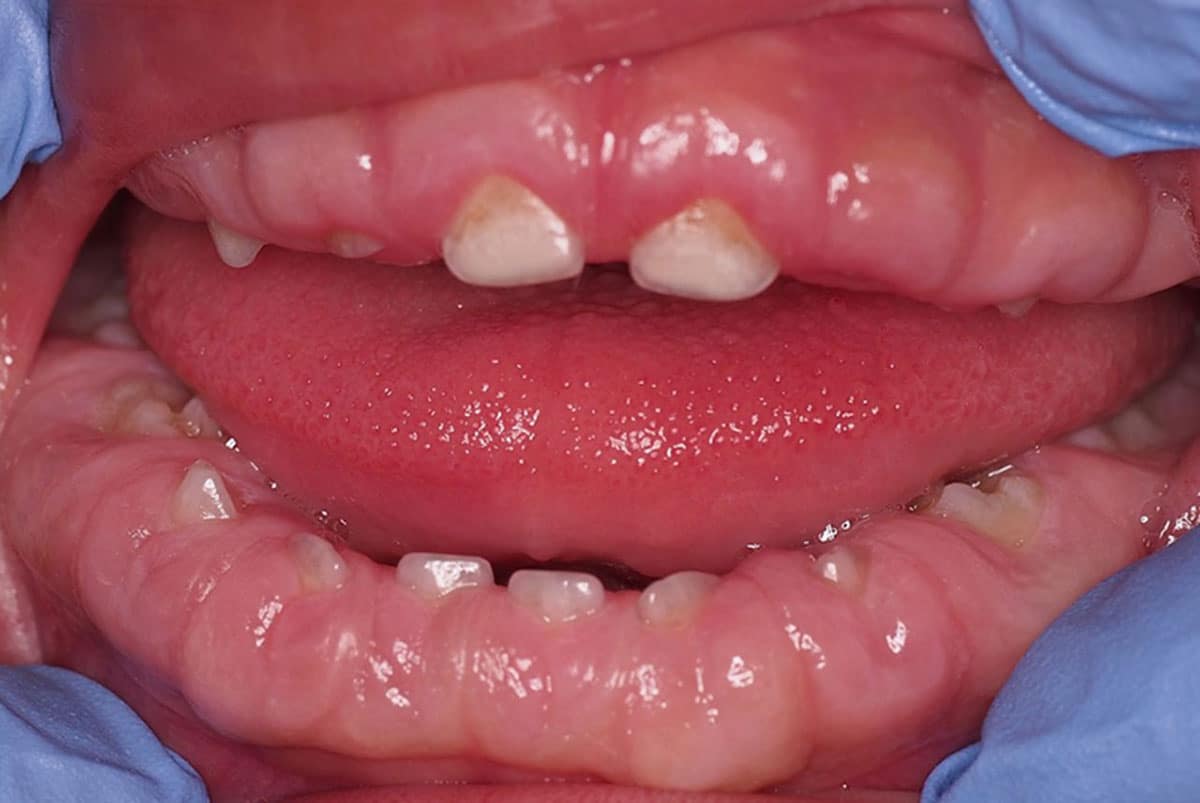
Gingival hyperplasia (also called gingival enlargement or gum overgrowth) is an abnormal and persistent increase in gum tissue. Unlike temporary puffiness from teething, hyperplasia involves actual growth of the gums, which does not go away on its own.
- It often looks like a tooth being covered by gum tissue, where the gums extend too far down and hide part of the crown.
- Parents may notice baby gums are very large and swollen, or that a child’s or daughter’s gums look bigger than their teeth.
- Unlike normal teething swelling, which comes and goes, swollen gums that won’t go down may be a sign of hyperplasia.
- In toddlers and older kids, the overgrowth can make teeth appear small, uneven, or even completely hidden by gum tissue.
- Families often describe it as gums growing fast in a kid, out of proportion to normal development.
Because gingival hyperplasia can interfere with chewing, speaking, and tooth eruption, it’s important to recognize the signs early and seek a pediatric dental evaluation.
Causes of Gingival Hyperplasia in Children
Several factors can contribute to gum overgrowth in kids, including everyday oral hygiene issues, genetics, and certain medications. Recognizing the cause is essential for choosing the right treatment.
1. Medication-Induced Overgrowth
Some prescription drugs can enlarge gum tissue, a side effect known as drug-induced gingival hyperplasia.
- The most common is phenytoin gingival hyperplasia in a child, often prescribed for seizure control.
- Other examples include cyclosporine (used after transplants) and, less commonly in children, calcium channel blockers.
- When gums thicken due to medications, they may appear as bleeding and overgrown gums in a toddler, especially since brushing becomes painful and less effective.
This form of gum overgrowth often requires both medical and dental management.
2. Inflammatory Gum Enlargement
Poor oral hygiene can allow plaque to build up along the gumline, leading to inflammatory gingival enlargement.
- It may look like gums growing over baby teeth, even if no medication is involved.
- Parents commonly see this as enlarged gums around baby teeth in children who resist brushing or flossing.
- If ignored, the swelling can mimic true hyperplasia.
- Professional cleanings combined with consistent home care usually resolve this problem.
This is the most preventable and reversible cause.
3. Genetic Causes: Hereditary Gingival Fibromatosis
Some children inherit a rare condition called hereditary gingival fibromatosis.
- The gums thicken gradually, often becoming noticeable when the first teeth erupt.
- Over time, the tissue may expand until a tooth is nearly covered by gum tissue, creating long-term problems with chewing and alignment.
- Unlike inflammation, this condition doesn’t improve with brushing and typically requires surgical treatment and ongoing monitoring.
4. Systemic and Hormonal Conditions
Although less common, certain medical conditions can also trigger gum overgrowth in children:
- Leukemia may cause sudden gum swelling and bleeding.
- Hormonal changes in pre-teens can contribute to temporary gum enlargement.
- In these situations, gums may look very large, swollen, and fast-growing in a child, signalling the need for immediate professional evaluation.
Can Overbrushing Cause Gum Overgrowth or Gingival Hyperplasia?

No, overbrushing does not cause gingival hyperplasia. Using a hard-bristled brush or scrubbing too aggressively can damage the gums, leading to gum recession, irritation, or bleeding, but it does not trigger gum tissue to grow excessively.
That said, brushing too hard can make gums sore and swollen, which sometimes confuses parents into thinking gum overgrowth is happening. The safest approach is to use a soft-bristled toothbrush, employ gentle circular motions, and apply a pea-sized amount of fluoride toothpaste to children over 3 years old.
Signs and Symptoms of Gingival Hyperplasia
The earliest clues of gingival hyperplasia in children are usually visual. Parents may notice that their child’s gums don’t look like typical teething swelling and instead appear larger, thicker, or continue to grow rather than recede.
Key signs to watch for include:
- Baby gums very large and swollen beyond what’s expected with teething.
- Gums that seem to be growing fast in a kid, rather than shrinking once a tooth erupts.
- A tooth being covered by gum tissue, either partially or entirely, making the teeth look smaller or hidden.
- Bleeding and overgrown gums in toddlers, especially when brushing or flossing.
- Gum tissue that feels fibrous, lumpy, or unusually firm to the touch.
- Persistent bad breath (halitosis) that doesn’t improve with brushing.
- Trouble with chewing, swallowing, or speech, especially if gum tissue blocks part of the teeth.
- In some cases, children may also complain of tenderness or pressure in the gums.
Parents often describe the appearance as if their daughter’s gums are bigger than her teeth or that their child’s swollen gums won’t go down even after weeks. These are clear signs that it’s time to book a pediatric dental appointment.
Diagnosis
Identifying gingival hyperplasia requires more than just looking at swollen gums. A pediatric dentist plays a key role in determining whether the condition is related to teething or if it is true gum overgrowth.
A thorough evaluation may include:
- Reviewing medical history and medications: Certain drugs, like phenytoin or cyclosporine, are well-known causes of gum enlargement in children.
- Examining the gum tissue closely: The dentist will check whether the swelling is symmetrical or localized and if it looks inflamed, fibrous, or firm.
- Differentiating causes: Determining if the enlargement is due to plaque-related inflammation, medication side effects, or genetic conditions such as hereditary gingival fibromatosis.
- Dental X-rays or imaging: In some cases, X-rays may be recommended to see how gum overgrowth is affecting tooth eruption.
- Referral to a pediatrician or specialist: If the gum enlargement looks unusual, severe, or progresses rapidly, the dentist may work with a physician to rule out systemic conditions like leukemia or hormonal issues.
Early diagnosis is crucial because timely intervention — whether it’s improved hygiene, adjusting medications, or surgical care- helps prevent long-term problems with chewing, speaking, and the eruption of permanent teeth.
Gingival Hyperplasia Treatment Options
The best treatment for gingival hyperplasia in children depends on the underlying cause, the severity of the gum enlargement, and how much it impacts eating, speaking, or tooth eruption. In most cases, treatment involves a combination of home care, professional dental visits, and sometimes medical or surgical intervention.
1. Oral Hygiene Management
For gum enlargement caused by plaque and inflammation, improving oral hygiene is the first and most important step.
- Brush your child’s teeth twice daily using a soft-bristle toothbrush designed for babies, toddlers, or children.
- Use fluoride toothpaste in the correct amount: a smear (rice-sized) for children under 3 and a pea-sized amount for ages 3–6.
- Begin flossing once daily as soon as two teeth touch, since food and plaque between teeth can worsen gum swelling.
- Schedule professional cleanings every 3–6 months, which help remove tartar (hardened plaque) that brushing and flossing can’t reach.
With consistent care, this type of gum overgrowth in kids usually improves and sometimes resolves completely.
2. Medication Adjustment
When gum overgrowth is linked to medications, such as phenytoin, gingival hyperplasia in children, the dentist may coordinate with the child’s pediatrician or specialist.
- The doctor may lower the dosage, switch to an alternative drug, or add supplemental treatments to manage side effects.
- Parents should never stop or change a medication on their own, since seizure control or transplant success may depend on it.
- Even if medications cannot be changed, good oral hygiene and frequent dental visits can reduce the severity of gum enlargement.
3. Surgical Removal
In more advanced cases, where gum tissue is covering teeth or blocking eruption, surgery may be necessary.
- Gingivectomy is the most common procedure, in which excess gum tissue is carefully removed to expose the teeth.
- Laser treatment may also be used, offering less bleeding, quicker healing, and greater comfort for children.
- Surgical treatment helps restore normal gum contours, improves chewing and speech, and allows permanent teeth to erupt correctly.vvvvvvvvvvvvvvvvvvvvvvvvvvvvvvvvvvvvvvvv
Although surgery provides immediate results, gum overgrowth may return if the underlying cause (such as medication use or poor hygiene) is not addressed.
4. Long-Term Monitoring
Children with hereditary gingival fibromatosis or medication-related gum overgrowth will need ongoing care.
- Regular dental visits allow the dentist to track gum health, tooth eruption, and jaw development.
- Monitoring ensures that any recurrence is caught early and managed before it interferes with eating, speaking, or alignment.
- For some children, gum overgrowth may become a chronic condition requiring periodic professional treatment.
Prevention and Home Care
While some cases of gingival hyperplasia in children are genetic or medication-related and cannot be fully prevented, many forms linked to plaque and inflammation can be reduced with consistent home care and early dental monitoring. Parents play the biggest role in lowering risks and spotting problems early.
Practical steps for prevention include:
Brush baby and toddler teeth gently twice a day
Use a soft-bristled toothbrush designed for young children. Gentle circular motions at the gumline help clean without irritation. This lowers the chance of plaque buildup that can trigger gum swelling.
Use the right amount of fluoride toothpaste
A smear (rice-sized amount) is enough for children under 3, while a pea-sized amount is recommended for ages 3–6. Fluoride strengthens teeth and helps protect against decay, which can worsen gum problems.
Visit the dentist early and often
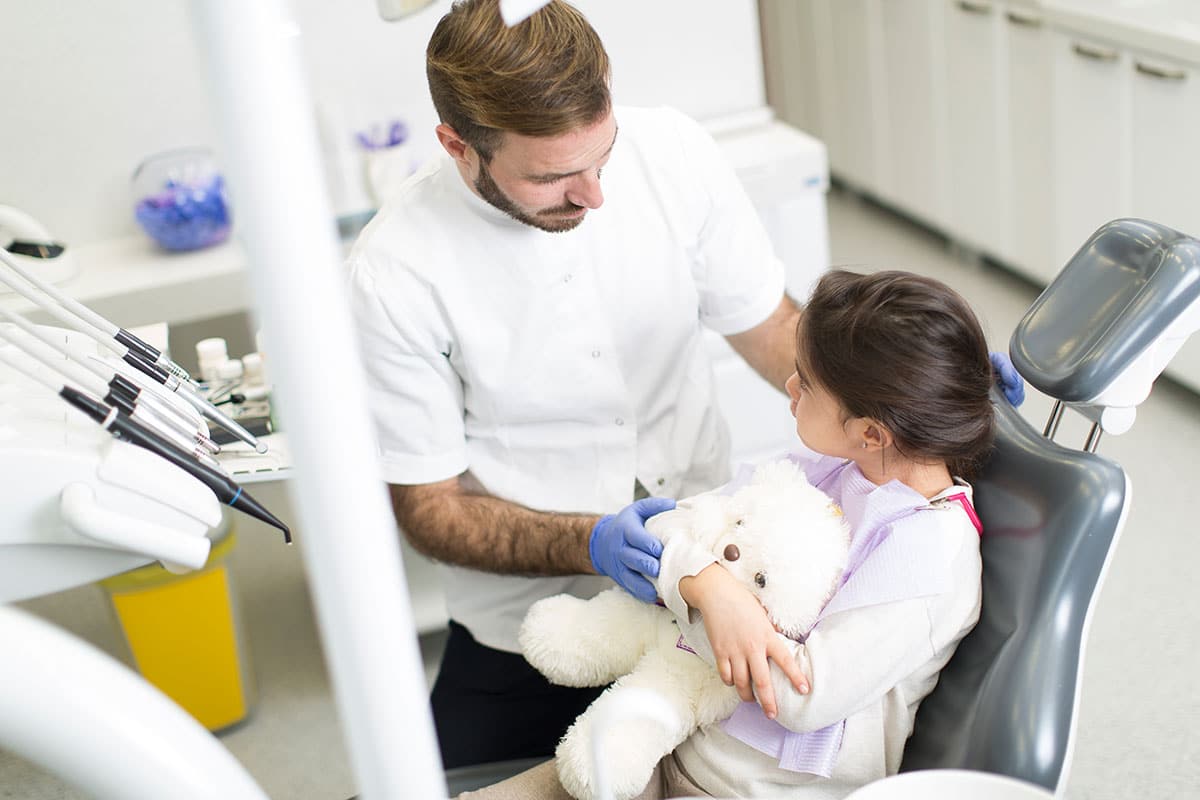
Schedule the first dental visit by age 1 and continue every six months, or more often if your child is at higher risk. Pediatric dentists can identify whether swollen gums that won’t go down are related to teething, plaque, or possible hyperplasia.
Inform the dentist about medications
If your child takes anti-seizure drugs like phenytoin or transplant medications like cyclosporine, let the dentist know. These drugs can cause gum tissue to overgrow teeth in toddlers or older kids, and early awareness helps manage side effects.
Watch for warning signs
Look for early indicators such as gums growing fast in kids, a tooth being covered by gum tissue, or gums that look unusually fibrous or firm. Catching these changes early makes treatment easier and more effective.
Promote healthy daily habits
Encourage a balanced diet, limit sugary snacks and drinks, and make brushing a positive daily routine. Good nutrition and consistent hygiene both reduce inflammation that contributes to gum problems.
Conclusion
Gingival hyperplasia in children can present in many ways, from baby gums very large and swollen during early development to a daughter’s gums looking bigger than her teeth as she grows. In some cases, parents may notice bleeding and overgrown gums in a toddler or even gum tissue that begins covering the teeth completely. No matter how it appears, gum overgrowth should always be taken seriously.
The underlying causes vary. For some kids, plaque buildup and poor hygiene create inflammation that makes the gums enlarge. Others develop gum problems due to medication side effects, such as phenytoin-induced gingival hyperplasia in children who take seizure control drugs. A small number of children may inherit hereditary gingival fibromatosis, where gum tissue thickens gradually over time.
While mild cases may improve with better oral hygiene and routine dental cleanings, more advanced forms often require medical collaboration or surgical treatment to restore normal gum contours and allow healthy tooth eruption.
If you notice gums growing over baby teeth or swollen gums that won’t go down, schedule an appointment with a pediatric dentist right away. With early diagnosis and proper care, your child can maintain healthy gums, develop normally aligned teeth, and enjoy a confident smile as they grow.