
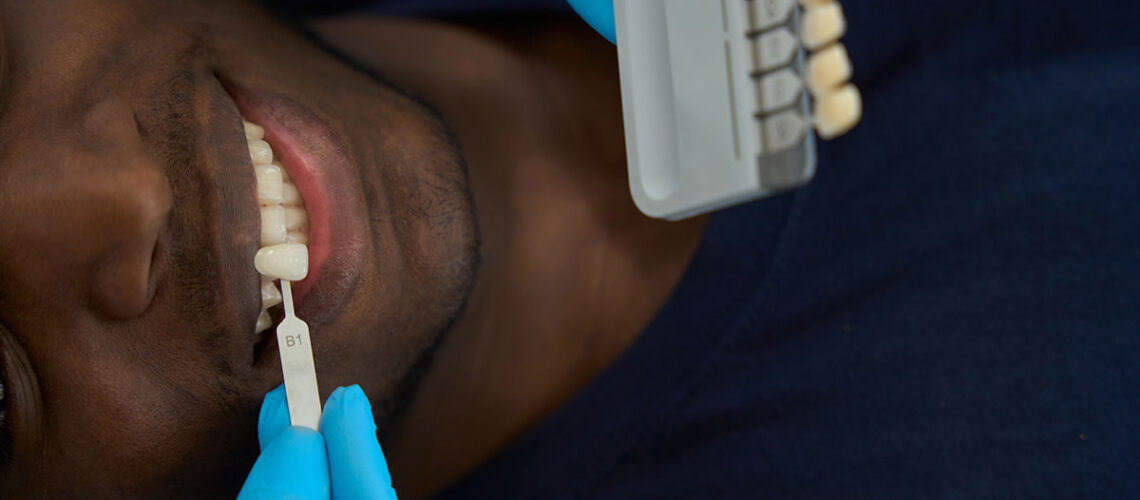
Crowns, onlays, and veneers are custom-made indirect restorations, meaning they are created outside the mouth and then bonded or cemented to the tooth. They are designed to restore strength, function, or appearance. Although they can look similar at first glance, each one serves a very different purpose.
Some teeth need full coverage and maximum reinforcement. Others benefit from a more conservative approach that preserves as much natural tooth as possible. Some patients are focused on cosmetic improvement, while others need structural protection or reinforcement after damage or decay.
Patients often ask questions such as:
“Do I really need a crown, or is there a more conservative option?”
“Is a veneer enough to fix a chip on my front tooth?”
“What exactly is an onlay and how is it different from a crown?”
This guide explains how dentists in Ontario evaluate which restoration is most appropriate, what makes each option unique, and how these treatments fit into your long-term oral health plan.
Table of Contents
What Each Restoration Actually Is
Before comparing crowns, onlays, and veneers, it helps to understand what each restoration actually is. Even though they may look similar, they serve very different purposes in dentistry.
Dental Crown
A dental crown is a full-coverage restoration that covers the entire visible part of your tooth, almost like a protective helmet. Once bonded or cemented in place, it restores the tooth’s strength, shape, and appearance while shielding it from future damage. Because it completely wraps around the tooth, a crown offers the highest level of reinforcement among all indirect restorations.
Crowns are recommended when a tooth can no longer safely function with a filling, veneer, or partial restoration. They are used in many situations, including:
- When a tooth is cracked or at risk of splitting
Cracks weaken the internal structure of a tooth. A crown holds the tooth together, distributes biting pressure evenly, and prevents the crack from extending into the root.
- When a large portion of the tooth is missing
If decay, an old filling, or trauma has removed too much natural structure, the tooth may not be strong enough for an onlay or filling. A crown replaces the missing parts and restores full function.
- When a patient grinds or clenches heavily
Bruxism puts extreme force on teeth. A strong crown—especially one made from zirconia—can protect a weakened tooth from breaking under pressure.
- After a root canal (particularly on molars and premolars)
Once a tooth has had root canal therapy, it becomes more brittle over time. Crowns provide the structural reinforcement needed to prevent fractures in the back teeth, where bite forces are highest.
- When the remaining tooth structure is too weak for a partial restoration
If there isn’t enough healthy enamel to bond an onlay or veneer securely, a full-coverage crown becomes the most predictable and long-lasting option.
Crowns are built for durability. With proper care, they can last many years and are designed to withstand strong chewing forces, temperature changes, and day-to-day wear. They also blend naturally with your smile, especially when made from modern ceramic materials that match your tooth colour and translucency.
Dental Onlay
A dental onlay is sometimes referred to as a “partial crown,” because it restores a damaged tooth without covering the entire surface. Instead, an onlay fits over the chewing surface and replaces one or more cusps — the raised points on the top of your tooth. This allows your dentist to repair the damaged areas while preserving as much of your natural tooth as possible.
Onlays are a key part of minimally invasive dentistry, which focuses on keeping healthy enamel intact whenever it is safe to do so. Rather than removing tooth structure for a full crown, an onlay reinforces only the portion that truly needs support.
Dentists recommend onlays when the tooth is damaged but still strong enough to avoid full-coverage treatment. They are commonly used when:
- There is moderate structural loss
If a section of the tooth has broken down but the remaining walls are still stable, an onlay can restore strength without requiring the entire tooth to be reshaped.
- A cusp is cracked or compromised
A cracked cusp is a common problem, especially in teeth with large fillings. An onlay can replace the weakened cusp and prevent the crack from spreading deeper into the tooth.
- There is enough healthy enamel to support secure bonding
Onlays rely on strong enamel margins for long-lasting adhesion. When enamel is intact, an onlay can bond very effectively and offer excellent durability.
- A crown would remove more tooth structure than necessary
If a crown would require removing healthy tooth structure that doesn’t need to be touched, an onlay becomes the more conservative and biologically friendly option.
Onlays are especially popular for molars and premolars, where chewing forces are highest. They strengthen the tooth against daily wear, protect vulnerable areas from cracking, and restore natural function while keeping more of your original tooth intact. Many patients appreciate that onlays offer a balance between durability and conservation, making them an ideal middle-ground option between a simple filling and a full crown.
Dental Veneer
A dental veneer is a thin, custom-made porcelain or ceramic shell that is bonded to the front surface of a tooth. Unlike crowns or onlays, veneers are primarily used for aesthetic enhancement rather than structural reinforcement. They allow your dentist to improve the appearance of a tooth while keeping the underlying structure largely intact.
Veneers are an important part of minimally invasive cosmetic dentistry. Because they require only a small amount of enamel reduction, they are a conservative option for patients who want a noticeable improvement in their smile without removing more tooth structure than necessary.
Dentists recommend veneers when the tooth is healthy overall but needs cosmetic refinement. They are commonly used in cases such as:
- The tooth is healthy, but has cosmetic concerns
If your tooth functions well but looks uneven, worn, or discoloured, a veneer can enhance its appearance without the need for full-coverage treatment.
- There are small chips, stains, gaps, or shape issues
Veneers can correct a wide range of aesthetic imperfections, including chipped edges, deep staining resistant to whitening, minor gaps between teeth, and teeth that look short or misshapen.
- The patient wants a natural, aesthetic result
Porcelain veneers are crafted to match the colour, translucency, and shine of natural enamel. They blend seamlessly with your smile and provide a long-lasting cosmetic improvement.
- A crown would be unnecessarily invasive
If your tooth does not require full structural reinforcement, a veneer allows your dentist to improve the appearance with far less enamel removal than a crown would require.
It is important to note that veneers do not strengthen the biting or chewing surfaces of the tooth. They only cover the front-facing surface. For this reason, they are not suitable for restoring cracked or weakened back teeth or for repairing structural damage that affects the overall strength of the tooth.
Veneers are best for patients who want a more attractive smile while keeping their natural teeth as intact as possible. With proper care, they offer beautiful, long-lasting cosmetic results.
Key Differences At a Glance
| Feature | Crowns | Onlays | Veneers |
|---|---|---|---|
|
Coverage |
Full coverage of the entire tooth |
Partial coverage of the biting surface and cusps |
Front surface only |
|
Purpose |
Strength and full protection |
Reinforcement while preserving tooth structure |
Cosmetic improvement |
|
Reduction |
Highest |
Moderate |
Minimal |
|
Best For |
Cracked, weak, heavily restored, or root canal-treated teeth |
Moderate damage or cracked cusps with strong enamel remaining |
Cosmetic issues like chips, stains, gaps, or shape concerns |
|
Common Location |
Front and back teeth |
Mostly back teeth |
Mostly front teeth |
|
Strength Level |
Highest durability |
Strong when enamel is intact |
Not meant for structural reinforcement |
|
Insurance in Ontario |
Often covered |
Often covered |
Usually not covered |
When Dentists Recommend Each Option
Choosing between a crown, onlay, or veneer depends on the condition of the tooth and your treatment goals. Below is a quick breakdown of when each option is most appropriate.
Crowns are preferred when:
- A tooth has a deep crack that threatens its long-term stability
- The tooth has undergone root canal treatment
- There is little natural tooth left
- The bite forces are high (such as with bruxism)
- A large filling has failed, or the tooth is severely worn
Onlays are recommended when:
- The tooth has moderate damage
- One or more cusps need replacement
- Enough enamel remains to support bonding
- The dentist wants to preserve natural tooth structure
- A crown would be more invasive than necessary
Veneers are recommended when:
- The tooth is structurally healthy
- The main goal is cosmetic improvement
- There is minor chipping or spacing
- The patient wants whiter, more uniform teeth
Which Option Is Best for a Cracked Tooth? (An Example Scenario)
Cracked teeth are one of the most common reasons patients compare crowns, onlays, and veneers. The right solution depends on how deep the crack is and which part of the tooth is affected. Dentists look closely at the crack’s direction, depth, and whether the tooth can still handle normal chewing forces.
Minor craze lines (surface-only cracks)
These hairline fractures affect only the outer enamel. They are usually harmless and often don’t require treatment. If they affect the look of a front tooth, a veneer can sometimes improve the appearance.
Cracked cusp
When only one cusp is fractured, the rest of the tooth may still be strong. An onlay is often the ideal option because it replaces the damaged cusp and reinforces the chewing surface without covering the entire tooth.
Crack extending toward the center of the tooth
Deeper cracks weaken the tooth’s structure. A full-coverage crown is typically recommended to hold the tooth together and prevent the crack from spreading into the root.
Vertical cracks reaching the root
Unfortunately, cracks that travel down the root are often not restorable. In these cases, the safest option may be extraction, followed by a replacement such as an implant or bridge.
Why are veneers not used for cracked teeth
Veneers only cover the front surface and do not provide structural reinforcement. They are cosmetic, not protective, so they aren’t suitable for treating structural cracks.
How Dentists Decide Between a Crown, Onlay, or Veneer
Dentists follow a careful, structured process when choosing the right restoration. The goal is always to protect the tooth, preserve as much natural structure as possible, and choose a treatment that will last. Here’s how the decision is made:
Step 1: Analyze how much healthy enamel and dentin remain
The amount of natural tooth left plays a major role.
If there is a sufficiently strong structure, a more conservative option (such as an onlay or veneer) may be possible. If very little remains, a crown is usually the safest choice.
Step 2: Identify the type and location of the damage
Back teeth absorb heavy chewing forces, so cracks or large restorations often require a crown or onlay.
Front teeth demand a more cosmetic approach, making veneers or aesthetic crowns appropriate when structure allows.
Step 3: Check for bruxism or heavy bite pressure
Grinding or clenching changes the treatment plan.
Patients with strong bite forces may need a crown or a reinforced onlay to prevent future breakage.
Step 4: Review past dental work
If the tooth already has multiple large fillings or has had a root canal, it may not be strong enough for partial repairs. A crown often provides the best long-term stability.
Step 5: Evaluate the enamel available for bonding
Onlays and veneers depend on healthy enamel edges for a secure bond.
If enamel is thin, damaged, or missing, a crown— which does not rely on bonding in the same way— becomes more reliable.
Step 6: Consider long-term predictability
Dentists choose the treatment that offers the most dependable outcome over time. Sometimes that means opting for a crown even if a tooth could temporarily support a more conservative option.
Step 7: Discuss cosmetic goals and expectations
For patients hoping to improve their smile, veneers or aesthetic crowns may be recommended. The final choice balances appearance, strength, and long-term function.
Materials, Strength, and Durability
Modern dental restorations are designed to look natural and handle everyday chewing forces. Crowns, onlays, and veneers are typically made from advanced ceramic materials that mimic the appearance of enamel while offering impressive strength.
Common materials include:
- Lithium disilicate (e.max): A strong, highly aesthetic ceramic often used for veneers, onlays, and many crowns.
- Zirconia: One of the strongest dental materials available. Ideal for back-tooth crowns or patients with heavy bite forces.
- Porcelain: Offers excellent translucency and natural appearance, commonly used for veneers and cosmetic restorations.
How long does each restoration usually last
While individual results vary, general ranges are:
- Crowns: 10 to 20+ years
- Onlays: 8 to 15 years
- Veneers: 10 to 15 years
With proper care, many restorations last even longer.
What affects the longevity of your restoration
Several factors influence how long your crown, onlay, or veneer will last:
- Grinding or clenching (bruxism)
- Size of the restoration (larger restorations often experience more stress)
- Location of the tooth (back teeth absorb more force)
- Thickness and quality of your enamel
- Daily oral hygiene habits
- Chewing patterns, especially if you chew on one side more than the other
Patients who grind or clench their teeth often benefit from a night guard, regardless of which restoration they receive. This simple protective step can significantly extend the life of the restoration and reduce strain on the natural teeth.
| Material | Strength Level | Typical Longevity | Best Use Case | Main Benefits |
|---|---|---|---|---|
|
Zirconia |
Extremely strong; highest fracture resistance |
10–20+ years |
Back teeth, heavy bite forces, bruxism cases |
Exceptional durability, ideal for high-stress areas, very resistant to chipping |
|
Lithium Disilicate (e.max) |
Strong and highly aesthetic |
10–15+ years |
Front teeth and moderate-strength restorations |
Natural translucency, excellent balance of strength and beauty |
|
Porcelain |
Moderate strength; best for cosmetic use |
10–15 years |
Veneers and cosmetic crowns on visible teeth |
Most lifelike appearance, excellent colour matching and translucency |
What Each Option Looks Like
Each restoration affects the appearance of your tooth differently. Some offer full cosmetic transformation, while others focus more on function with subtle visual improvements. Here’s what you can expect from each option.
Crowns
Ceramic crowns can be highly aesthetic, especially when crafted from modern materials like porcelain, e.max, or zirconia. They can completely reshape a tooth, brighten its colour, and correct imperfections. Crowns are an excellent choice for front teeth that need both a cosmetic upgrade and structural support. They provide a natural look while also restoring strength.
Onlays
Onlays are designed primarily for function, but they still blend in seamlessly with your natural tooth. Because they only cover the chewing surface and cusps, they do not change the appearance of the front of the tooth. Any cosmetic improvement is subtle, but an onlay can make a tooth look smoother and healthier while preserving your natural enamel.
Veneers
Veneers offer the most dramatic cosmetic enhancement of the three options, especially for visible front teeth. They can instantly improve colour, symmetry, shape, and overall brightness. Veneers are custom-designed to look natural while still providing a noticeable improvement in your smile. When expertly crafted, they are virtually indistinguishable from natural tooth enamel.
Cost and Coverage in Ontario (What to Expect)
Dental fees vary from clinic to clinic, but most offices in Ontario use the Ontario Dental Association (ODA) Fee Guide as a reference point when setting their prices. Actual fees may differ based on materials, complexity, and the specific tooth being treated, but the ranges below offer a reliable estimate.
Typical Price Ranges in Ontario (CAD)
Dental Crowns: $1,200 – $2,000+
Price depends on the material (zirconia, e.max, porcelain-fused-to-metal) and the tooth being restored. Crowns made with premium ceramics often fall at the higher end of the range.
Dental Onlays: $900 – $1,600
Onlays are usually slightly less costly than full crowns, though similar lab fees and materials mean prices can overlap.
Porcelain Veneers: $1,000 – $2,500 per tooth
Veneers are cosmetic, handcrafted restorations. Pricing varies significantly based on material, cosmetic complexity, and the number of veneers needed.
These ranges help patients plan ahead, but every case is unique. Your dentist will provide an accurate estimate once they assess your tooth and determine the ideal treatment.
How Insurance Works in Ontario (Including CDCP)
Dental Insurance Coverage for Crowns & Onlays
Most private insurance plans categorize crowns and onlays under major restorative benefits. This means coverage typically applies, but often at a reduced percentage compared to basic services. Before starting treatment, it’s a good idea to request a predetermination, which outlines:
- The percentage your plan will cover
- Any frequency limits (for example, one crown per tooth every 5–10 years)
- Material restrictions (some plans may not cover premium ceramics)
- Annual maximums that may impact your out-of-pocket cost
Are Veneers Covered By Insurance?
Veneers are usually not covered because they are considered elective cosmetic treatments.
An exception may occur if the veneer restores structural loss rather than appearance alone, but this is uncommon and requires detailed documentation.
CDCP (Canadian Dental Care Plan) Coverage
Coverage under CDCP varies based on clinical need and the patient’s eligibility category.
In general:
- Crowns may be covered if they are medically necessary, such as when a tooth is cracked or severely weakened.
- Onlays may also be covered when required to restore function.
- Veneers are generally not covered, unless they are restoring functional tooth structure rather than addressing cosmetic concerns.
Your dental office can help you check both private insurance and CDCP eligibility, submit required paperwork, and estimate your out-of-pocket costs before treatment begins.
Quick Takeaway
Crowns, onlays, and veneers each play a unique role in restoring or enhancing your teeth. A crown is the best option when a tooth needs full protection and strength. An onlay offers a conservative solution that preserves healthy enamel while still reinforcing the tooth. A veneer focuses on cosmetic improvement, transforming the front surface with minimal alteration to the natural tooth.
Choosing the right restoration depends on the tooth’s condition, your bite forces, cosmetic goals, and the amount of healthy enamel remaining. A careful dental evaluation allows your dentist to determine which option provides the safest, most durable, and most natural-looking result.
If you are unsure which treatment is right for you, booking an exam is the best next step. Your dentist can assess your specific needs, explain the alternatives, and create a personalized plan that supports your long-term oral health and a confident smile.
Frequently Asked Questions
Yes. If the tooth develops structural issues later on, a veneer can be removed and replaced with a crown for additional strength.
Dentists evaluate whether the remaining tooth walls are strong enough to support bonding. If the tooth can reliably withstand chewing forces, an onlay may be chosen instead of a crown.
No. Veneers are minimally invasive. Only a small amount of enamel is removed from the front surface to allow for proper bonding and a natural appearance.
Often yes. Onlays are stronger and more durable than large fillings and reduce the risk of future cracking. But if too much tooth structure is missing, a crown may be needed instead.
Yes. Materials like porcelain and lithium disilicate (e.max) are commonly used for all three, although zirconia is usually preferred for crowns where maximum strength is needed.
No. Standard veneers involve removing a small amount of enamel, while no-prep veneers require little to no shaping. Not everyone is a candidate for no-prep veneers.
If the tooth underneath is still healthy, the onlay can often be replaced. If the tooth has weakened further, a crown may be recommended instead.
If the tooth does not have enough enamel or if it is structurally compromised, a veneer would not be safe or long-lasting. In those cases, the dentist will recommend a crown for protection.
No. Veneers improve appearance but do not change the bite. Bite issues usually require orthodontic treatment or crowns that can reshape the entire tooth.
Modern ceramic restorations are designed to match the natural shape of your tooth. When properly done, they feel and look completely natural.
Back teeth require strength to handle chewing forces. Veneers only cover the front surface, so they cannot reinforce the areas that experience pressure.
Very rarely. Onlays are designed for chewing surfaces and cusps, which front teeth do not have. Front teeth usually need veneers or crowns, depending on their condition.
No. Veneers usually require the least preparation. Onlays require moderate preparation. Crowns involve the most shaping because they cover the entire tooth.
Yes, if enough healthy enamel remains. If removing the old filling leaves the tooth too weak, a crown will offer better long-term protection.
Veneers preserve the most enamel. Onlays preserve significantly more structure than crowns. Crowns require the most shaping but provide the highest level of strength.
Dentists carefully match colour and shape so the restored tooth blends smoothly with neighbouring teeth. In some cases, patients choose multiple veneers for better symmetry.
Check us out on Facebook and Twitter for daily information about Oral Health from Martindale Dental, or visit our offices in Hamilton and St. Catharines.
Have more questions?
Please contact us for all inquiries or to book an appointment with one of our convenient clinic locations. We look forward to hearing from you.