

The Pros and Cons of Dental Floss
Dental floss has been used for centuries and remains the gold standard for interdental cleaning. It physically scrapes plaque, bacteria, and food particles from between the teeth and just under the gumline — places where toothbrush bristles cannot reach. When used correctly, flossing is one of the most effective ways to prevent cavities, gingivitis, and gum disease.
Pros of Floss
- Highly effective plaque removal: Floss is unmatched when it comes to scraping off sticky plaque and biofilm on the tooth surface. This direct contact helps prevent cavities and gum inflammation in tight spaces.
- Low cost and portable: A pack of floss costs only a few dollars, and it’s easy to keep in your purse, car, or office desk for daily use.
- No equipment required: Floss works anywhere, anytime — no need for water, batteries, or electricity.
- CDA/ADA approved: Many floss brands carry the Canadian and American Dental Association Seal of Acceptance, confirming they meet strict standards for reducing plaque and gingivitis.
- Multiple options available: Patients can choose from waxed, unwaxed, flavoured, spongy floss, or floss picks, making it easier to find a version that fits their comfort and needs.
Cons of Floss
- Requires dexterity and skill: Flossing correctly takes practice. For people with arthritis, limited mobility, or young children, it can feel awkward and challenging.
- Difficult around dental work: Maneuvering floss around braces, bridges, or tight contacts can be frustrating and time-consuming. Many patients stop flossing altogether when orthodontics are involved.
- Can cause discomfort or bleeding: People often avoid flossing because their gums bleed or feel sore. In most cases, this is due to existing gum inflammation, not the floss itself. With consistent use, bleeding usually decreases as gum health improves.
- Compliance is low: Despite being effective, only a small percentage of adults floss daily. Surveys show many people view flossing as inconvenient or easy to skip.
Dental floss is an affordable, effective, and widely recommended option. However, it only works if you use it correctly and consistently. For patients who struggle with technique, a dentist or hygienist can provide demonstrations or suggest alternatives like floss picks or water flossers.
The Pros and Cons of Waterpik (Water Flosser)
The Waterpik, the leading brand of water flossers, uses a pulsating stream of pressurized water to clean between teeth, along the gumline, and around dental work. Unlike floss, which scrapes the surface of teeth, the Waterpik flushes out food particles, bacteria, and loose plaque from areas that can be hard to reach with traditional floss. It has become especially popular among patients with braces, implants, and gum disease.
Pros of Waterpik
- Excellent for orthodontic appliances: A Waterpik can quickly rinse around brackets, wires, and retainers, removing trapped food debris in minutes — something that can take much longer with floss threaders.
- Gentle on gums: The pulsating water is soothing and less likely to cause irritation or bleeding, making it ideal for patients with gingivitis, periodontitis, or sensitive gums.
- Great for implants and bridges: Traditional floss can fray, snag, or be difficult to maneuver around implants, crowns, and bridges. A Waterpik makes it easier to keep these areas clean and reduce the risk of infection.
- Easy for people with dexterity challenges: Patients with arthritis, Parkinson’s disease, or limited hand mobility often find a Waterpik much easier to use than traditional floss.
- Fresh, clean feeling: Many patients report that using a Waterpik leaves their mouth feeling cleaner and fresher than flossing alone, thanks to the flushing action along the gumline.
- CDA/ADA Seal of Acceptance: Several Waterpik models carry the CDA and ADA Seal, confirming their effectiveness at reducing plaque and gum disease.
Cons of Waterpik
- Higher cost: A Waterpik requires an initial investment ($50–$100+) and occasional replacement of tips. While floss costs only a few dollars, a water flosser is a larger financial commitment.
- Needs water and electricity: Unlike floss, it’s not portable. It must be used near a sink, plugged in or charged, and filled with water before each use.
- Less effective on sticky plaque: While great at flushing debris, a Waterpik cannot scrape sticky plaque off tight tooth surfaces the way floss can.
- Requires daily maintenance: The reservoir and tip need to be emptied, rinsed, and dried to prevent mould or bacterial buildup. Skipping this step can reduce hygiene benefits.
- Bulky for travel: Standard countertop models can be large and less convenient to bring on trips compared to a small pack of floss.
A Waterpik is an excellent adjunct to flossing and a practical solution for patients with braces, implants, gum disease, or dexterity issues. However, it may not fully replace floss, since it doesn’t physically scrape plaque from tooth surfaces.
Which Cleans Better: Floss or Waterpik?
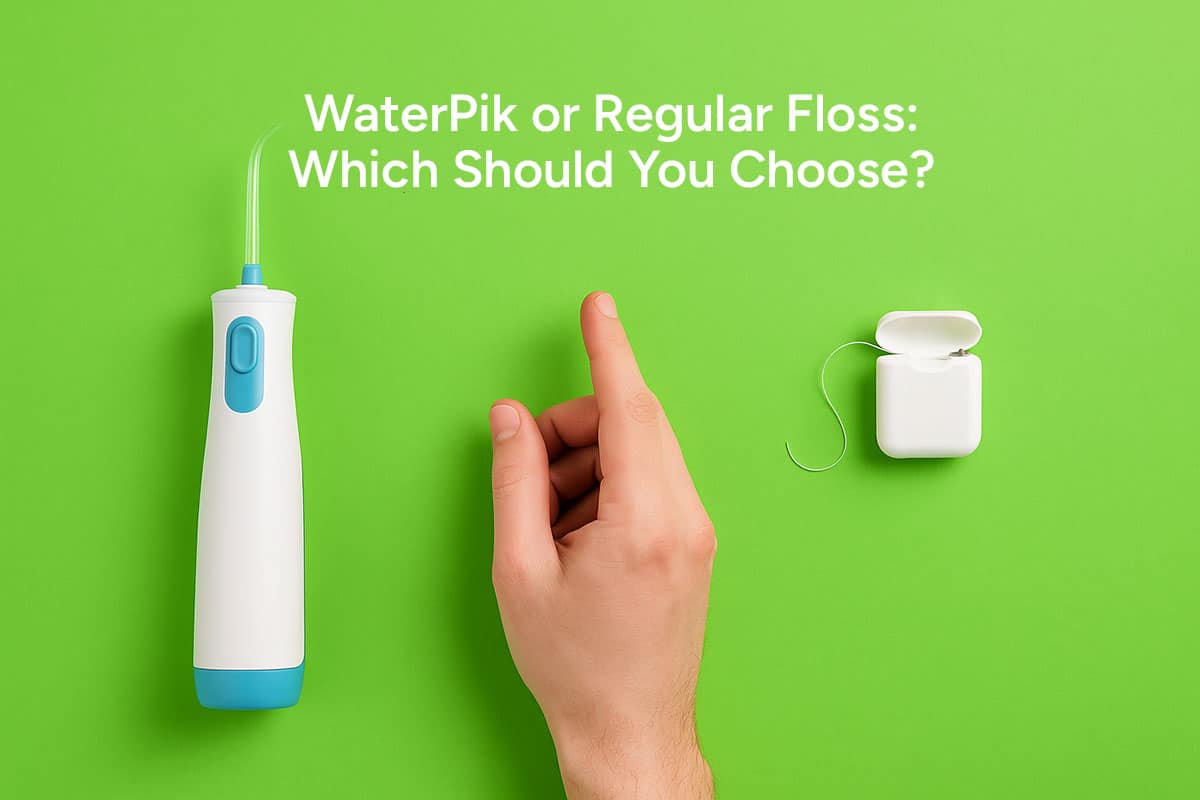
The answer depends on what kind of cleaning you need most. Both floss and Waterpik are effective, but they target slightly different problems. Studies comparing the effectiveness of water flossers and dental floss show:
- Floss excels at removing sticky plaque and biofilm that adheres to tooth surfaces between tight contacts. This scraping action is what makes floss so valuable in preventing cavities between teeth.
- Water flossers (like Waterpik) are better at flushing out food debris, bacteria, and loose plaque from along the gumline and around dental work, where floss may be difficult to maneuver.
- Research also suggests that water flossers reduce bleeding and gum inflammation more effectively in some patients, making them especially helpful for people with gingivitis or early gum disease.
Practical Breakdown
- For everyday plaque removal: Floss remains slightly more effective because of its ability to scrape plaque off tooth surfaces physically.
- For gum health and inflammation: Waterpik may have an edge, as studies show it can reduce bleeding and gingival inflammation better than floss in certain populations.
- For braces, implants, and bridges: Waterpik often wins for convenience and practicality, since traditional flossing can be time-consuming or nearly impossible in these situations.
- For patients with dexterity issues (arthritis, mobility limitations): Waterpik is usually the easier tool to use consistently.
Dentist Opinion: Floss vs Water Flosser
Our dental team recognizes both floss and specific Waterpik models as effective for reducing plaque and gingivitis. Our guidance is simple: the best tool is the one you’ll use consistently.
We also recommend a combined approach — floss to scrape plaque, and use a Waterpik to flush debris and support gum health.
Our dentists tailor recommendations based on patient needs. They usually look something like this:
Healthy adults with no dental work: Daily flossing is usually enough.
Patients with braces: Waterpik makes cleaning faster and easier, often used in conjunction with floss threaders.
Patients with implants, bridges, or crowns: Waterpik is beneficial for flushing bacteria around dental work.
Patients with gum disease: Combination therapy (floss + Waterpik) helps reduce both plaque and inflammation.
Seniors or patients with arthritis: Waterpik may be more practical and easier to handle than floss.
It’s also a good idea to floss first, then use a Waterpik to flush away loosened debris for the cleanest results.
Waterpik for Braces: A Game-Changer
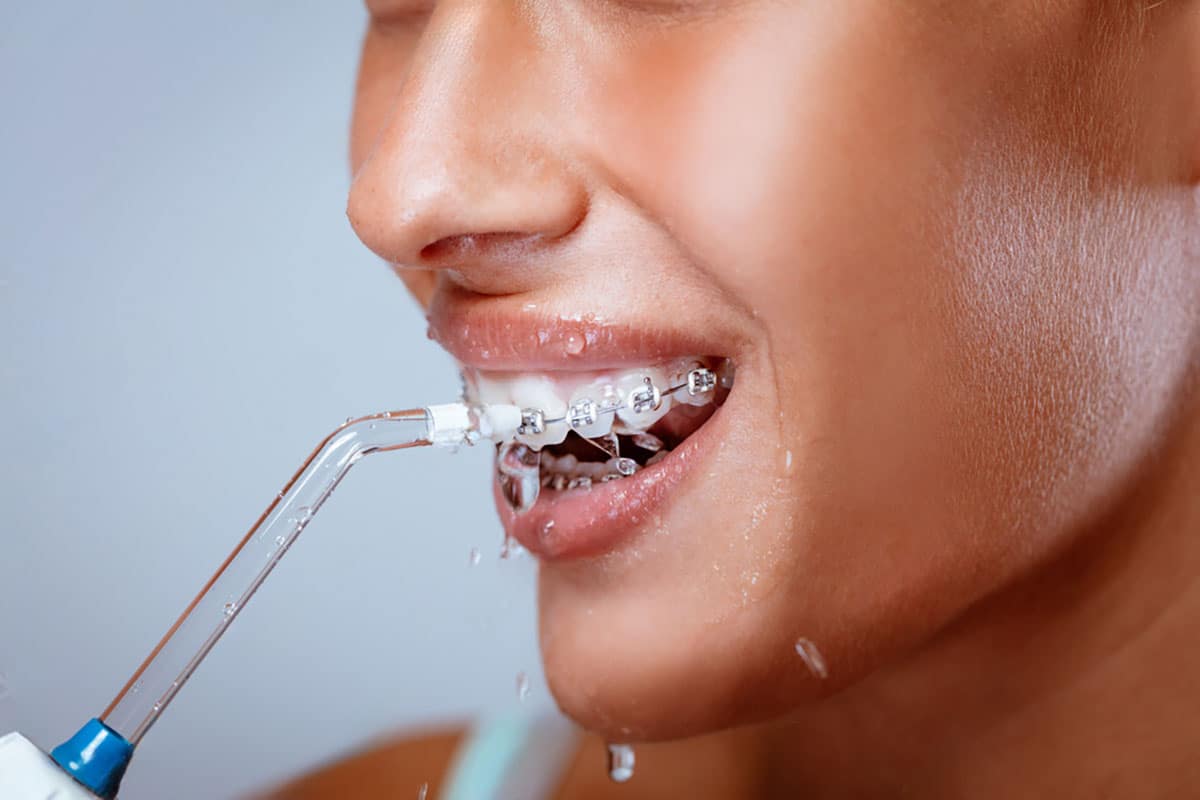
Braces create the perfect hiding spots for food particles and plaque. Brackets, wires, and bands make it much harder to clean effectively with a toothbrush alone, which is why orthodontic patients are at higher risk for cavities, gum inflammation, and white spot lesions (early enamel damage).
Traditional flossing with braces can be time-consuming; it often requires a floss threader, weaving the floss under each wire, and carefully maneuvering around brackets. For many patients, this can take 10–15 minutes daily, resulting in poor compliance.
A Waterpik water flosser dramatically simplifies the process. With a targeted stream of water, it can:
- Flush out food particles and bacteria in just 2–3 minutes
- Reach around wires, bands, and brackets where floss can’t easily go
- Massage the gums to improve circulation and reduce inflammation
- Encourage patients to actually keep up with daily interdental cleaning since it’s faster and easier