
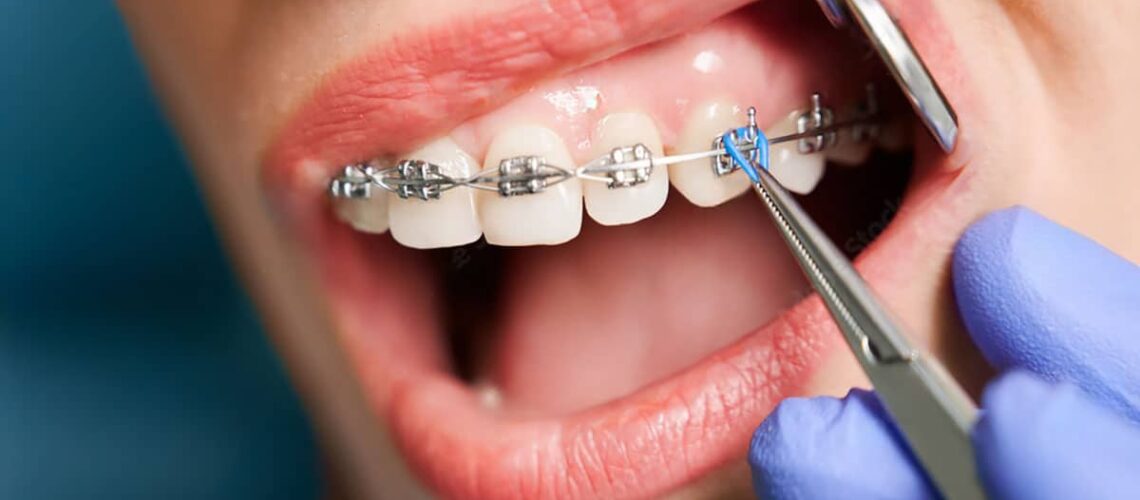
Most people want their orthodontic treatment to move along as quickly as possible — especially with all the new “fast braces” and “accelerated aligner” options advertised online. But can teeth really move faster safely? And what happens if they’re pushed beyond their biological limits?
Tooth movement isn’t just a mechanical process; it’s a complex interaction between bone, ligament, and time. When braces or aligners apply controlled, gentle pressure, your teeth shift naturally and predictably. When that pressure is too strong or too frequent, it can strain the roots, gums, and bone that hold your smile in place.
In this guide, we’ll explain how teeth actually move, why going too fast can cause lasting damage, and how orthodontists monitor and protect your teeth every step of the way. By the end, you’ll understand exactly what “safe speed” means, and why the slow, steady approach always wins when it comes to a healthy, lifelong smile.
Table of Contents
Understanding How Teeth Move During Orthodontic Treatment
Whether you’re wearing braces or clear aligners, the goal is the same — to gently guide teeth into healthier, better-aligned positions. Tooth movement happens when light, continuous pressure triggers a biological process called bone remodelling: bone on one side of the tooth breaks down, while new bone forms on the other side.
That process takes time. Your body needs to resorb and rebuild bone around each root safely. If pressure is too strong or movement happens too quickly, the bone and root can’t keep up, and that’s when problems can begin.
How Tooth Movement Works (and Why Speed Matters)
Orthodontic tooth movement relies on the periodontal ligament (PDL) — the soft, elastic tissue that connects each tooth to the bone.
When steady, gentle pressure is applied, the PDL signals your body to remodel bone:
On the pressure side, bone cells called osteoclasts break down small amounts of bone.
On the tension side, osteoblasts rebuild new bone behind the moving tooth.
This delicate balance allows teeth to shift while keeping their roots and surrounding bone healthy.
When forces are light and continuous, the PDL stays healthy, and the bone has time to rebuild.
When forces are too strong or adjustments happen too frequently, the ligament can’t recover — leading to inflammation, microscopic root damage, and possible long-term weakening.
That’s why orthodontists move teeth in stages and schedule visits every few weeks: steady progress protects the biology that keeps your teeth strong.
Can Teeth Move Too Fast? What Can Go Wrong
Yes — both braces and aligners can move teeth too fast if forces are excessive, intervals are shortened too much, or treatment isn’t monitored closely.
Teeth don’t like to be rushed, and your roots, gums, and bone will show it if they are.
Moving teeth too aggressively can cause several complications, most of which are preventable with proper monitoring.
1. External Apical Root Resorption (EARR)
This is the most common concern when tooth movement happens too fast.
EARR means the tooth’s root tip shortens slightly as the body responds to inflammation in the PDL.
- Mild resorption: Occurs in many patients; usually less than 2 mm and clinically harmless.
- Severe resorption: Rare (under 5–10% of cases) but can shorten roots enough to affect long-term stability.
- Prevention: X-rays every 6–12 months and force adjustments if early resorption appears.
2. Increased Tooth Mobility
A bit of looseness is normal while teeth are moving, but excessive or prolonged mobility may mean bone support isn’t keeping up.
Your orthodontist may pause adjustments to allow stabilization before continuing.
3. Pulpal (Nerve) Inflammation
Heavy or sustained force can irritate the nerve inside the tooth, leading to sensitivity or prolonged soreness.
Most cases settle on their own, but if discomfort lingers or worsens, your orthodontist may test pulp vitality or refer for endodontic evaluation.
4. Gum Recession and Bone Loss
If the bone thins faster than it rebuilds, the gum tissue can recede, exposing root surfaces.
This risk increases in people with thin gum biotypes, existing recession, or high brushing force during treatment.
5. Relapse or Bite Imbalance
Even if teeth appear straight, moving them too fast can leave the bone and ligament fibres “memory-loaded.”
Without proper stabilization time, teeth can drift back, or your bite may feel off after braces or aligners.
Most of these issues are manageable — or avoidable altogether — when your orthodontist controls force levels, properly spaces visits, and monitors radiographically. It’s not about moving fast, but moving safely.
How Fast Is “Too Fast”?
There’s no single “speed limit” that applies to every orthodontic case, but decades of research and clinical experience give us a reliable guideline:
Healthy tooth movement typically occurs at about 0.5 to 1.5 millimetres per month.
That range reflects the pace at which your body can safely remodel bone around each tooth, and pushing beyond this rate doesn’t make teeth “catch up” faster; instead, it overwhelms the supporting structures and raises the risk of root and gum damage.
The safe speed of movement depends on several biological and mechanical factors:
- Tooth type: Front teeth and smaller roots tend to move faster than thick-rooted molars.
- Bone density and thickness: Denser jawbone (often in adults) resists movement more than softer bone in younger patients.
- Type of movement: Tipping or rotation can occur more quickly than bodily translation or intrusion, which require more bone remodeling.
- Age and metabolism: Younger patients generally remodel bone faster, while adults require slower, steadier forces.
- Force magnitude: The lighter and more continuous the pressure, the healthier the movement. Heavy or intermittent forces can damage the ligament and slow things down overall.
Orthodontists use precise force calibration, bracket adjustments, or staged aligner changes to keep your teeth moving within this biologically safe range. If a product or provider claims to “move teeth twice as fast,” it’s not accelerating biology — it’s bypassing it, which can lead to unwanted side effects like root shortening or gum recession.
Why Orthodontists Space Out Appointments
The timing of orthodontic visits is typically every 4–8 weeks for braces or 6–10 weeks for aligners and is carefully calculated, not just convenient. These intervals are based on how long it takes your bone and supporting tissues to respond to each stage of movement.
When your braces are adjusted or you switch to a new set of aligners, it triggers the bone remodelling cycle, and the biological process takes several weeks to complete before the next safe adjustment can happen.
Spacing visits too closely can interrupt that healing window, as the supporting ligament and bone need time to stabilize before more force is applied.
These visits also serve another purpose — monitoring. At each appointment, your orthodontist checks for subtle signs that movement is staying within healthy limits: tooth mobility, gum changes, bite balance, and root integrity on X-rays when needed. This kind of oversight simply isn’t possible with mail-order or “DIY” aligner systems, where there are no in-person checks to catch early issues before they cause harm.
So while the wait between visits might feel slow, that time is actually what allows your teeth, bone, and gums to adapt safely, and ensures that your results last long after treatment ends.
Braces vs. Aligners: Which Is Safer When It Comes to Tooth Movement Speed?
Braces and aligners rely on the same biological process to move teeth — gentle, continuous pressure that reshapes bone over time. Neither method is automatically faster or safer; what truly matters is how carefully the treatment is designed, applied, and monitored.
Here’s how they compare:
| Factor | Braces | Clear Aligners |
|---|---|---|
|
Force Control |
Continuous light pressure from wires and elastics |
Staged, intermittent pressure from each aligner tray |
|
Monitoring |
Adjusted in-office every few weeks |
In-person or remote check-ins, depending on the provider |
|
Risk of Moving Too Fast |
Possible if wires or elastics apply excessive force |
Possible if trays are changed too quickly or skipped |
|
Root Resorption Risk |
Slightly higher in long or complex cases |
Comparable when forces remain light and biologically safe |
In short, neither braces nor aligners are the problem; instead, improper force levels or lack of professional supervision are.
When treatment is well-planned and regularly monitored, both systems can move teeth efficiently while keeping your roots, bone, and gums healthy.
Accelerated Orthodontics: Are “Fast-Track” Methods Safe?
Many modern techniques claim to make braces or aligners work faster — from vibration devices like AcceleDent®, to small bone-stimulating procedures such as micro-osteoperforation or piezocision, to light-based methods known as photobiomodulation (PBM).
These approaches are designed to stimulate bone remodelling and shorten treatment time, but research shows mixed results:
- Micro-osteoperforation / Piezocision: Creating tiny perforations in the bone can temporarily boost cellular activity and help teeth start moving sooner, though the overall time savings are often modest.
- Vibration devices: Gentle vibration has been proposed to accelerate bone response, but most controlled studies find little to no consistent reduction in total treatment length.
- Low-level laser or light therapy (PBM): May reduce soreness and inflammation, and can slightly improve early tooth movement, but it doesn’t dramatically shorten treatment overall.
Under professional supervision, these tools are generally safe, and some can make treatment feel more comfortable. However, none can override the body’s natural rate of bone remodelling. Be cautious of any “six-month smile” or “rapid results” claim — these usually describe limited cosmetic adjustments, not full bite correction or true biological acceleration.
The safest way to finish faster is still the simplest: follow your orthodontist’s instructions, keep appointments on schedule, and maintain excellent oral hygiene.
Who’s More at Risk of Damage from Moving Teeth Too Fast
While most patients can safely undergo orthodontic treatment, some people are naturally more prone to root resorption, gum recession, or bone loss if teeth move too aggressively. These risk factors don’t mean you can’t have braces or aligners; they simply require extra care and monitoring.
You may be at higher risk if you have:
- Previous dental trauma or injury: Teeth that have been bumped, fractured, or previously moved are more sensitive to pressure.
- Naturally short, thin, or curved (dilacerated) roots: These roots are structurally more vulnerable to resorption.
- Family history of root resorption: Genetics can influence how your bone and ligament respond to orthodontic force.
- Chronic inflammation or medical conditions such as asthma or allergies, which can alter the body’s healing response.
- Certain medications: Long-term use of corticosteroids, bisphosphonates, or other drugs that affect bone metabolism may slow bone turnover or healing.
- Extended treatment duration or heavy elastic wear: Longer or high-force treatments increase the cumulative stress on roots and bone.
How Orthodontists Prevent Teeth from Moving Too Fast
Orthodontists are trained to balance progress with safety, making sure teeth move efficiently without overwhelming the bone or roots.
Every stage of your treatment — from planning to your final retainer — is designed around that balance.
Here’s how your orthodontist keeps movement within healthy limits:
- Thorough treatment planning: Before treatment begins, digital scans and X-rays help assess bone levels, root shape, and any risk factors like previous trauma or thin bone.
- Precise force control: The wires, attachments, or aligner sequences are carefully chosen and calibrated to apply light, continuous and controlled pressure based on tooth size, shape, and bone density.
- Routine X-ray monitoring: Imaging at 6–12 month intervals allows your orthodontist to spot early signs of root shortening or bone changes before they become significant.
- Adjustments or pauses when needed: If early resorption or inflammation appears, movement can be slowed or paused to allow the bone and ligament to recover fully.
- Tracking patient compliance: Your orthodontist ensures aligners aren’t worn for too long, trays aren’t changed too soon, and elastics are used correctly — all of which keep movement on schedule and biologically safe.
In short, careful supervision, not speed, is what ensures lasting, healthy results. Regular visits and communication help your orthodontist make small corrections before minor issues ever become major ones.
Warning Signs Your Teeth Might Be Moving Too Fast
While some tenderness is normal during orthodontic treatment, specific symptoms can signal that your teeth or supporting tissues are under too much pressure. Call your orthodontist if you notice any of the following:
- Pain or soreness that lasts more than a few days after adjustments or tray changes
- Teeth that feel increasingly loose or unstable when biting or touching them
- Gum recession or root surfaces becoming visible, especially near the front teeth
- New or worsening sensitivity to temperature or pressure
- Unexpected gaps, bite changes, or shifting contact points between visits
- Persistent swelling or bleeding of the gums that doesn’t improve with brushing and flossing
These signs don’t always mean something serious, but they’re worth checking promptly. Most issues can be reversed or controlled if caught early — which is why keeping up with your regular appointments is just as important as wearing your braces or aligners as directed.
Moving at the Right Speed Is The Key
Braces and aligners are incredibly effective tools for transforming your smile — but your teeth, bone, and roots can only move as fast as biology allows. Trying to push that process too quickly can create lasting damage that may not always be reversible.
The most successful orthodontic treatments share three things in common:
- In-person monitoring to catch even the smallest signs of stress early
- Steady, carefully controlled adjustments that let bone and ligaments adapt naturally
- Personalized planning based on your anatomy, age, and individual risk factors
If your treatment ever feels like it’s moving too quickly, or you’re promised dramatic results in half the usual time, don’t be afraid to ask questions. True orthodontic success isn’t about how fast your teeth move; it’s about how well they stay healthy and stable once they’ve arrived.
When orthodontics is guided by patience, precision, and biology, your smile doesn’t just look great — it lasts.
Frequently Asked Questions
Yes — if movement is overly delayed, it can prolong treatment and increase plaque buildup or gum irritation. Orthodontists aim for the ideal biological pace, not simply “slower is better.”
They assess tooth mobility, X-rays, and bite changes. Subtle movement patterns, gum health, and even speech or chewing feedback help them adjust forces as needed.
Mild soreness for 1–3 days is completely normal. If pain lasts longer or becomes sharp or throbbing, it may indicate excessive pressure — call your orthodontist.
Severe root resorption is rare. Most cases are minor and have no lasting effect when monitored. Long-term issues typically arise only if problems go unchecked.
Delaying visits can slow progress, increase plaque buildup, or allow small issues (like over-movement or wire irritation) to worsen before they’re corrected.
Yes — adult bone is denser and remodels more slowly, so treatment requires gentler forces and longer intervals to avoid stress on roots and bone.
Yes. Drugs that alter bone metabolism — such as corticosteroids, bisphosphonates, or certain anti-inflammatories — can slow or change tooth movement.
Maintain excellent oral hygiene, follow wear schedules exactly, eat a balanced diet rich in calcium and vitamin D, and avoid excessive force on your teeth (like grinding or biting hard objects).
Stop wearing the trays and contact a licensed orthodontist. Without in-person monitoring, it’s impossible to know if the movement is healthy or causing harm.
Yes — nicotine restricts blood flow and slows healing, which can make movement less predictable and increase the risk of gum problems or bone loss.
It’s best to wait. Whitening can increase temporary sensitivity and uneven coloration if teeth are still moving or brackets cover part of the enamel.
Yes — frequent hard or sticky foods can loosen brackets or attachments, delaying movement. Nail biting or chewing on pens can also stress teeth unnecessarily.
Absolutely. Discuss your concerns with your orthodontist — they can modify force levels, use lighter wires, or extend intervals between changes.
Typically at the start, around 6–12 months in, and again if there are signs of unusual movement or treatment complications.
Check us out on Facebook and Twitter for daily information about Oral Health from Martindale Dental, or visit our offices in Hamilton and St. Catharines.
Have more questions?
Please contact us for all inquiries or to book an appointment with one of our convenient clinic locations. We look forward to hearing from you.