
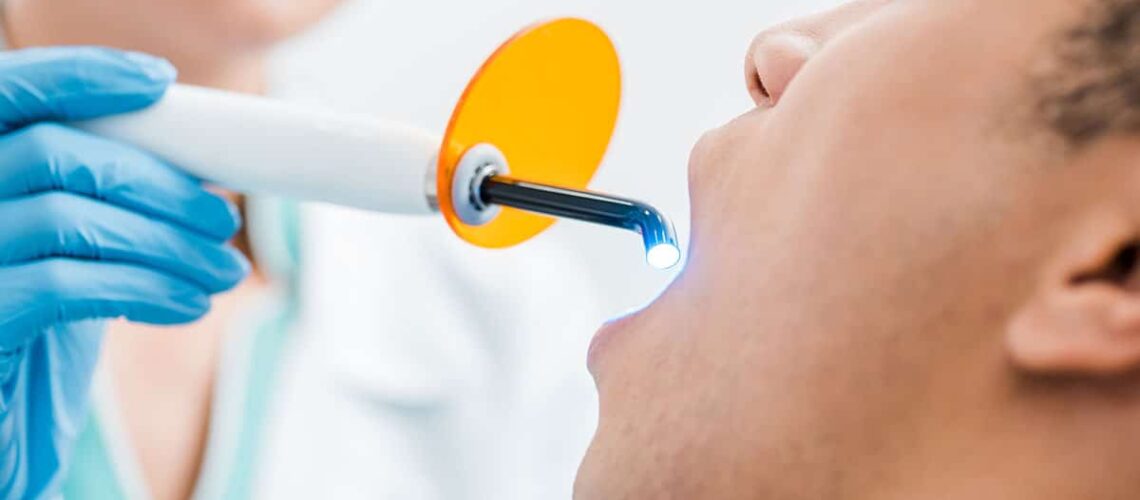
image of a man having dental sealants applied to his teeth. image is showing the UV light hardening process taking place.

Are Dental Sealants Worth It for Your Child’s Teeth?

Your child brushes twice a day, you limit sugary snacks, and you keep up with regular dental checkups. But when the dentist suggests dental sealants for your child’s back teeth, you’re left wondering: Are they really necessary?

The short answer: For many kids, yes — dental sealants can be one of the most effective, painless, and cost-saving preventive treatments in modern dentistry. In fact, the CDC reports that sealants can prevent 80% of cavities in the back teeth,  the most common spot for childhood decay.

This guide breaks down what sealants are, how they work, the pros and cons, safety facts, costs in Ontario, and how to decide if they’re right for your child.

Table of Contents

What Are Dental Sealants?

Dental sealants are ultra-thin, protective coatings typically made from tooth-coloured resin or glass ionomer that are applied to the chewing surfaces of back teeth (molars and premolars). These teeth have natural pits and grooves (fissures) that can trap food and harbour bacteria, even with good brushing habits.

Once applied, sealants:

  • Block bacteria and food debris from settling into grooves
  • Create a smoother, easier-to-clean surface that resists plaque build-up
  • May release fluoride over time to strengthen enamel and prevent decay

Because the procedure is quick and non-invasive — with no drilling, freezing, or discomfort, sealants are especially ideal for children and teens, as well as adults prone to cavities in these areas.

Why Sealants Work

Molars are the workhorses of chewing, but their deep pits and winding grooves create the perfect environment for plaque and bacteria to hide. Even with thorough brushing and flossing, toothbrush bristles can’t always reach into every crevice — leaving those areas vulnerable to decay.

Dental sealants solve this problem by creating a protective shield over the tooth surface. This smooth barrier keeps out food particles, plaque, and acids that can wear down enamel.

Research highlights their effectiveness:

  • 3× fewer cavities – Children without sealants are up to three times more likely to develop cavities in their molars than those with them.
  • Enhanced protection with fluoride – When sealants are combined with regular fluoride treatments, decay risk drops even further, as fluoride strengthens enamel while sealants block harmful debris.
  • Long-term benefits – By preventing decay early, sealants can help reduce the need for fillings, crowns, and more invasive treatments later in life.

When Should Kids Get Sealants?

Timing is everything when it comes to getting the most benefit from dental sealants. Applying them as soon as vulnerable teeth emerge gives maximum protection before decay has a chance to start.

  • First permanent molars (“6-year molars”) – These usually appear between ages 5 and 7. Sealants should be applied soon after eruption, when the chewing surfaces are still cavity-free.
  • Second permanent molars (“12-year molars”) – These come in between ages 11 and 14. Early sealing helps safeguard them during the high-risk teen years, when diet and oral hygiene can be inconsistent.

In some cases, dentists may also recommend sealants for primary (baby) molars if:

  • The grooves and pits are unusually deep
  • The child has a history of early decay
  • There are other cavity risk factors, such as weak enamel, poor diet, or limited access to fluoride

By sealing teeth early, parents can give their children a head start on a healthier, cavity-free smile that lasts well into adulthood.

Step-by-Step: How Sealants Are Applied

Getting dental sealants is simple, painless, and fast — typically 10–15 minutes per tooth. In most cases, they can be applied during a regular checkup with no need for freezing or drilling.

    1. Cleaning – The tooth’s chewing surface is thoroughly polished to remove any plaque, food particles, or surface stains, ensuring the sealant bonds to a clean surface.
    2. Drying & Isolation – Cotton rolls, a cheek shield, or a small sponge keep the tooth completely dry — moisture can prevent the sealant from sticking properly.
      Etching – A mild acidic gel is brushed on for about 15–30 seconds. This harmless step gently roughens the enamel so the sealant can grip securely.
    3. Rinsing & Drying – The etching gel is rinsed away, and the tooth is dried again to maintain a moisture-free surface.
      Sealant Application – A thin, liquid resin or glass ionomer is painted into the grooves and pits of the tooth, flowing into every crevice.
    4. Curing – A safe blue LED light is shone on the tooth for 10–20 seconds to harden the sealant instantly.
    5. Final Check – The dentist checks that the sealant is smooth, properly bonded, and that the bite feels comfortable.

Good news: Once the appointment is over, your child can eat, drink, and return to school immediately — no downtime required.
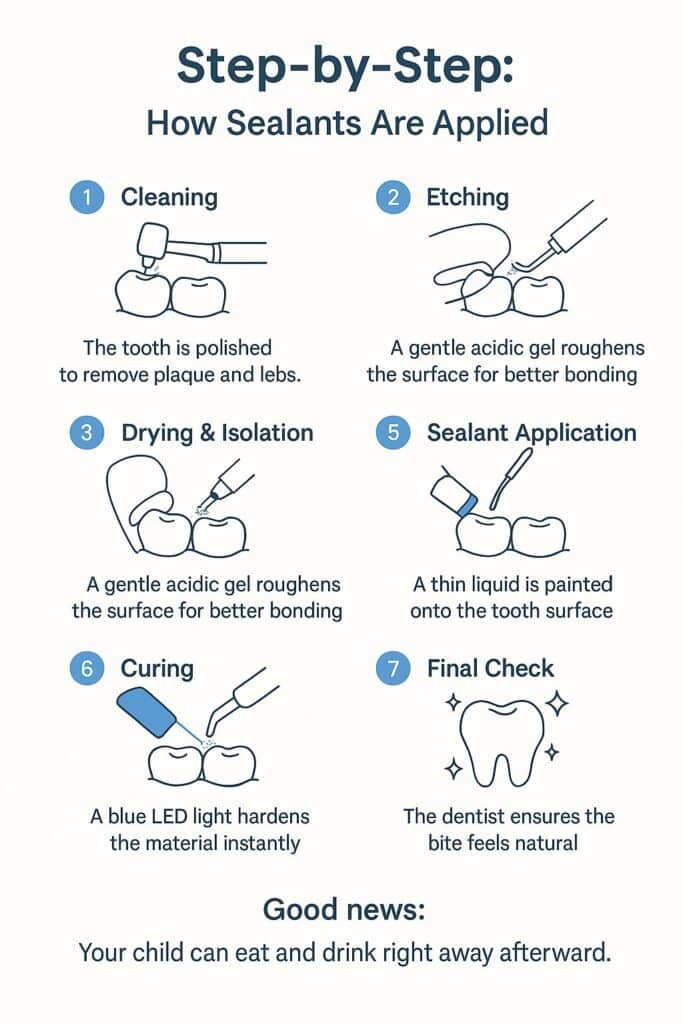

diagram detailing the steps involved in applying dental sealants to your child's teeth

Pros and Cons of Dental Sealants

Dental sealants are widely recognized as one of the most effective tools for preventing cavities in children and teens. Like any dental treatment, they come with clear advantages as well as a few considerations to keep in mind.

Pros

  • Painless and Needle-Free – The procedure involves no drilling or anesthesia, making it stress-free for kids and adults alike.
  • High Cavity Prevention Rate – Studies show sealants can reduce cavities in molars by up to 80%, especially in the first two years after application.
  • Long-Lasting Protection – With proper care, resin-based sealants can last up to 10 years; glass ionomer types last 3–5 years while still offering fluoride benefits.
  • Cost-Effective Preventive Care – Far less expensive than treating cavities with fillings, crowns, or root canals later.
  • Safe for Most Patients – Suitable for children, teens, and even adults at high risk for decay; modern materials are BPA-free or contain negligible amounts well below safety limits.

Cons

  • Not Permanent – Sealants naturally wear down over time and may need touch-ups or full replacement.
  • Technique-Sensitive – For resin-based sealants, even a small amount of moisture during placement can affect bonding and durability.
  • Rare Allergic Reaction – Although uncommon, some patients may react to sealant materials; always inform your dentist of allergies.
  • BPA Concerns – While trace BPA can be present in some sealants, research shows the exposure is minimal, much lower than everyday contact from receipts or household dust.

Types of Dental Sealants

Type Pros Cons
Resin-based Sealants
  • Long-lasting – up to 10 years with proper care
  • Strong mechanical bond to enamel
  • Transparent or tooth-colored for a natural look
  • Requires completely dry tooth during application
  • More technique-sensitive for the dentist
  • Glass Ionomer Sealants
  • Releases fluoride to strengthen enamel
  • More tolerant of moisture during placement
  • Chemically bonds to tooth structure
  • Shorter lifespan – about 3–5 years
  • Softer material, more prone to wear or chipping
  • Are Dental Sealants Safe? (BPA & Allergy Facts)

    Modern dental sealants are considered very safe for both children and adults. Most sealant materials today are BPA-free, and even those that contain trace amounts have levels far below everyday exposures, such as touching store receipts, breathing household dust, or using certain plastics. According to the American Dental Association (ADA), the minimal BPA present in some sealants poses no known health risk, and the cavity-prevention benefits greatly outweigh any potential concern.

    Allergic reactions to sealants are extremely rare. However, if your child has a history of allergies to dental materials or other plastics, let your dentist know in advance. They can select a hypoallergenic or alternative sealant material to ensure complete safety and peace of mind.

    Dental Sealants Vs. Fluoride Varnish

    Dental sealants and fluoride varnish are both proven tools for cavity prevention, but they work in different ways. Sealants act as a physical shield over vulnerable molars, while fluoride varnish strengthens the entire tooth surface. Understanding their differences can help you decide, with your dentist’s guidance, which option, or combination, is best for your child’s needs.

    Feature Dental Sealants Fluoride Varnish
    Coverage
    Applied to the chewing surfaces of back teeth (molars and premolars), sealing deep grooves and pits.
    Painted onto all tooth surfaces — front, back, and chewing surfaces — for full-mouth coverage.
    Protection
    Creates a physical barrier that blocks food particles and bacteria from getting trapped in grooves.
    Provides chemical protection by strengthening enamel and making it more resistant to acid attacks from bacteria and food.
    Best for
    Children (or adults) with deep grooves in molars or a history of cavities in back teeth.
    Patients of all ages for general cavity prevention and enamel strengthening.
    Application Frequency
    Typically lasts 3–10 years but should be checked at each dental visit.
    Usually applied 2–4 times per year as part of regular checkups.
    Combined Use
    When used alongside fluoride varnish, offers the highest level of cavity prevention, protecting both vulnerable grooves and smooth tooth surfaces.
    Works best in combination with sealants for complete coverage of all tooth surfaces.

    Caring for Teeth After Sealants

    Sealants provide long-lasting protection, but their effectiveness depends on good oral habits and regular dental care. To keep your child’s teeth healthy and sealants intact:

    • Brush twice daily with fluoride toothpaste – Use a soft-bristled brush and gentle circular motions, focusing on all tooth surfaces.
    • Floss at least once a day – This removes plaque and food from between teeth where sealants can’t reach.
    • Limit sticky or hard foods – Caramels, gummy candies, ice, and hard nuts can chip or loosen sealants.
    • Maintain regular dental checkups – Dentists can monitor the sealants, reapply if needed, and catch any early signs of wear.
    • Encourage a tooth-friendly diet – Plenty of water, fresh fruits, and crunchy vegetables help clean teeth naturally and support enamel health.

    With proper care, sealants can last for many years and significantly reduce the risk of cavities.

    Are They Worth It?

    For children at higher risk of cavities, especially those with deep pits and grooves in their molars, dental sealants are one of the most cost-effective preventive treatments available. They can prevent up to 80% of decay in back teeth, avoiding the need for more invasive and expensive procedures like fillings, crowns, or extractions later on. The application is quick, painless, and backed by decades of strong clinical evidence from the Canadian Dental Association, CDC, and other leading health organizations. For many families, sealants offer peace of mind and long-term protection for a child’s smile.

    Key Takeaway

    Dental sealants are one of the simplest and most effective ways to safeguard your child’s oral health, particularly in the back molars, where toothbrushes can’t always reach and cavities often start. This safe, affordable treatment can reduce cavity risk by up to 80%, potentially protecting your child’s teeth for years with just one painless appointment.

    Sealants are designed to blend in with the natural colour of the teeth. They are usually clear, white, or slightly tinted, making them almost invisible unless you look closely. Parents often can’t tell their child has sealants without being shown by the dentist.

    In some situations, yes. If the cavity is in its very early stage and hasn’t broken through much enamel, a sealant can be placed over it to “seal in” the decay and stop it from progressing. Dentists will decide this based on an exam and possibly X-rays.

    No. While sealants are most commonly applied to permanent molars, they can also be used on baby teeth if those teeth have deep grooves or pits and the child is at high risk for cavities. Protecting baby teeth is important because they hold space for permanent teeth and help with speech and chewing.

    Not at all. Once placed, sealants don’t need any special care beyond regular brushing twice a day with fluoride toothpaste and flossing once a day. Good home care will help the sealants last longer and keep the rest of the mouth healthy.

    At first, they may notice a slightly different texture when their tongue touches the tooth, but this sensation disappears quickly — often within a day. The sealant becomes a natural part of the tooth’s surface.

    Dentists check the bite after placement and smooth any high spots to make sure the teeth close together comfortably. A properly applied sealant should not cause any change in the way your child chews or bites.

    Yes. Sealants can be gently removed by a dentist using polishing tools. This is sometimes done if the sealant needs to be replaced, repaired, or if there is a reason to access the tooth surface underneath.

    Chips or wear can happen over time due to chewing. If this occurs, the dentist can repair the area quickly by cleaning the tooth and adding more sealant. This is a simple process and doesn’t require drilling or anesthesia.

    Absolutely. Adults who have deep grooves, a history of cavities, or other risk factors can benefit from sealants just like children. While it’s less common, many dentists offer sealants to adult patients for extra protection.

    No. Sealants only protect the chewing surfaces of teeth. They do not cover or seal the spaces between teeth, which is why flossing remains essential to prevent decay in those areas.

    Yes, but depending on the position of brackets and wires, your dentist may recommend waiting until braces are removed for best access. In some cases, sealants are applied before orthodontics begins.

    No, and when applied correctly, sealants actually block bacteria from entering the grooves of the teeth. If there’s any very early decay, sealing it off can stop it from progressing.

    Yes. Many dental sealants today are BPA-free or have extremely low levels — far below everyday exposure from common items like plastic bottles or receipts. You can request BPA-free products from your dentist.

    In some cases, yes. By covering exposed grooves, sealants can reduce sensitivity caused by trapped food or plaque buildup. However, they are not a primary treatment for tooth sensitivity — your dentist will first check for underlying causes.

    Check us out on Facebook and Twitter for daily information about Oral Health from Martindale Dental, or visit our offices in Hamilton and St. Catharines.

    Have more questions?

    Please contact us for all inquiries or to book an appointment with one of our convenient clinic locations.  We look forward to hearing from you.